What Are International Valves and How Do They Work?

International Valves are not one specific valve type. The term describes valves selected, manufactured, or supplied for projects involving international engineering standards and markets. These standards help buyers compare key details, such as pressure ratings, materials, dimensions, and end connections. They do not make every valve interchangeable. A mismatch in flange size or pressure class can delay installation or create operating problems.

A valve controls the movement of liquid, gas, or steam through a pipe. Inside, a movable part opens, narrows, or blocks the flow path. A ball valve turns a drilled sphere; a gate valve lifts or lowers a barrier. Globe and butterfly valves regulate flow in different ways, while check valves help prevent reverse movement. Simple in principle. Specific in practice. Operators may turn a handwheel, move a lever, or use an electric or pneumatic actuator. The right choice depends on the fluid, temperature, pressure, flow needs, and maintenance plan. A valve that works well with clean water may not suit a hot, abrasive process fluid. That detail is easy to overlook.

Understanding how International Valves work means looking beyond the product name. Buyers and engineers should check technical documentation, applicable standards, material compatibility, and test records before installation. Standards support consistency, but they cannot replace sound system design or qualified inspection. Even experienced teams can miss a small specification difference. Careful verification helps reduce that risk.
What Are International Valves and How Do They Work?

What International Valves Are and Where They Are Used

An “international valve” is not one specific valve design. The term usually describes a valve made or selected to meet recognized international requirements for dimensions, materials, pressure ratings, or testing. These shared specifications can help components fit pipelines across projects and make inspection more consistent. The exact standard still matters. A label alone does not prove that a valve suits a particular service.

Valves regulate, isolate, or redirect liquids and gases. Gate valves commonly provide open-or-closed isolation, while globe valves allow more controlled flow adjustment. Ball and butterfly valves can shut off flow quickly, and check valves help prevent reverse movement. Each design behaves differently. A valve that works well on a water line may be unsuitable for hot steam or abrasive slurry.

These valves appear in water-treatment plants, building services, power facilities, chemical processing, and oil and gas systems. Engineers consider the fluid, temperature, pressure, pipe size, and operating frequency before choosing one. For example, a maintenance team may need a valve that can be inspected safely in a cramped pump room. The details matter. International specifications improve consistency, but they do not replace careful material selection or site-specific checks.
What Are International Valves and How Do They Work?

Valves control, direct, or stop the flow of liquids and gases in piping systems. Their designs and operating principles are used across industries worldwide, including water treatment, energy, manufacturing, and building services.

How to read the chart: A value of 1 indicates a function commonly associated with that valve type; 0 indicates it is not typically used for that purpose. Actual suitability depends on the valve design and operating conditions.

The Main Components of an International Valve

An international valve is generally built to recognized engineering standards, but its exact layout depends on valve type and service. The body forms the pressure-containing shell and directs fluid through the valve. A bonnet closes the body and supports moving parts. Bolted joints and gaskets help contain pressure; their condition matters as much as the metal surfaces.

Inside, the trim controls flow. It may include a gate, disc, plug, or ball, along with a seat that provides a sealing surface. The stem transfers movement from a handwheel or actuator to the closure element. Packing around the stem limits leakage, while the actuator supplies manual or powered movement. The terminology can be confusing: “trim” does not describe the same set of parts in every design. Check the valve’s drawing and specifications rather than assuming components are interchangeable. Small details matter.

Tips: Before installation, confirm flow direction, pressure rating, and compatible materials. Inspect the seat and stem for scratches or debris. Never force a stiff handwheel; resistance may signal a fault, though I would verify the cause before drawing conclusions.

How Valve Movement Controls Fluid Flow

A valve controls fluid by changing the size of the passage inside a pipe. As the stem moves, a disc, ball, plug, or gate shifts toward or away from the valve seat. This changes how much water, oil, gas, or another compatible fluid can pass. The movement may be manual, such as turning a handwheel, or powered by an actuator. Small movements matter.

A quarter-turn valve typically opens or closes with a 90-degree rotation. A globe valve moves its disc along the flow path, making it useful for adjusting flow more gradually. Gate valves are generally intended for fully open or fully closed service, not precise throttling. A partly closed valve can create turbulence, noise, and extra wear. The exact effect depends on valve design and operating conditions.

Flow does not depend on valve position alone. Pressure difference, fluid properties, and pipe sizing also play a part. A valve opened halfway does not necessarily deliver half the flow. In practice, operators check indicators, pressure readings, and signs of leakage rather than relying on position alone. Real systems are messier than diagrams. That is worth remembering when selecting or adjusting a valve.

Common International Valve Types and Their Functions

International valves are designed around recognized standards for dimensions, pressure ratings, materials, and testing. Their shapes may look similar, but their jobs differ. Choosing by appearance alone is risky.

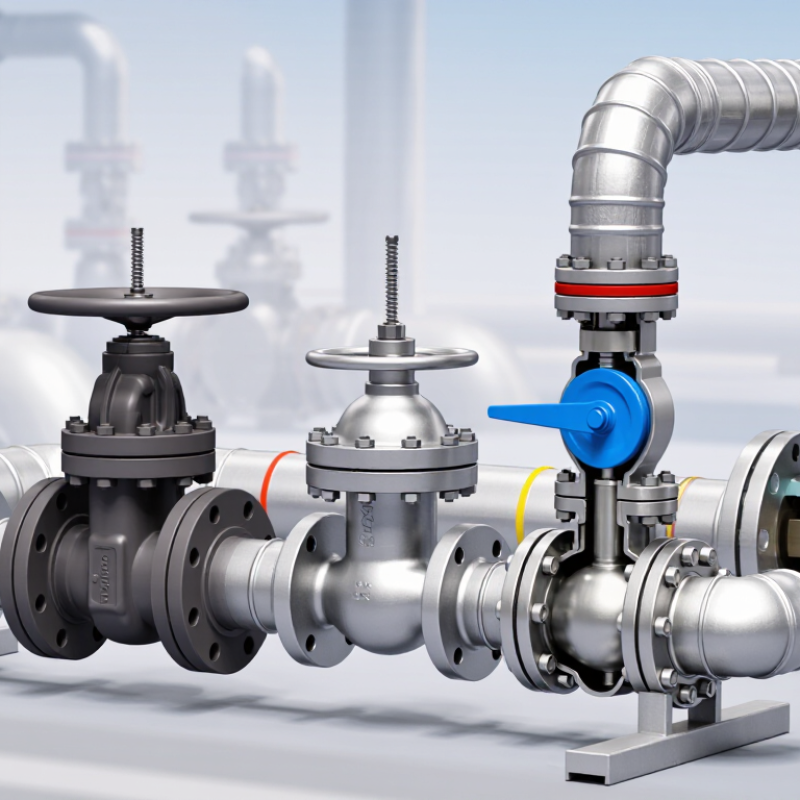
A gate valve opens or closes a straight flow path, making it useful for isolation rather than frequent throttling. A globe valve offers finer flow control, though its curved passage creates more pressure loss. A ball valve turns a drilled sphere a quarter-turn. They open quickly and seal tightly in many services.

Butterfly valves use a rotating disc, so they are compact and often practical in larger pipes. Small details matter.

Check valves allow flow in one direction and help prevent backflow. A swing check uses a hinged disc; a lift check moves vertically. Pressure-relief valves protect equipment by opening when pressure exceeds a set limit. Each type has limits.

Fluid chemistry, temperature, operating pressure, and installation position can change performance. In practice, a valve chart cannot replace checking the actual service conditions. Even a familiar design can behave poorly when mismatched to the line.

Standards for Selecting and Operating International Valves

International valves are not one universal product category; the term usually describes valves designed to meet recognized standards across markets. Start with the service: fluid, pressure, temperature, corrosion risk, and required flow control. Then compare the applicable design and test requirements. ASME B16.34 addresses valve design, materials, pressure-temperature ratings, and testing, while ISO 5208 specifies pressure tests for industrial valves. API 598 provides inspection and testing requirements for several valve types. Check the exact edition and scope; similar-looking standards are not always interchangeable. Fit matters. Verify end connections, face-to-face dimensions, materials, and actuator compatibility against the project specification.

Operation deserves equal care. Confirm installation direction and support, then test the actuator and position indication before commissioning. Use the manufacturer’s allowable pressure and temperature limits, and avoid using isolation valves for throttling unless their design permits it. The International Energy Agency’s Global Methane Tracker 2024 estimated that fossil fuel operations emitted about 120 million tonnes of methane in 2023. That figure is not valve-specific, but it reinforces why leak checks and sound maintenance matter. Record inspection findings, packing adjustments, and unusual torque; small changes can reveal wear. Standards reduce uncertainty, not all of it. Field conditions can still expose a poor material choice or an overlooked operating habit.

What Are International Valves and How Do They Work? - Standards for Selecting and Operating International Valves

Selection Dimension Relevant Standard or Reference What It Covers Practical Selection and Operating Guidance
Pipeline valve design API 6D / ISO 14313 Design, manufacture, and testing requirements for valves used in pipeline transportation systems for petroleum and natural gas. Check the project specification for the required edition and scope. Confirm valve type, end connections, pressure rating, materials, and testing requirements against the pipeline service.
Pressure-containing design and ratings ASME B16.34 Requirements for valve construction, pressure-temperature ratings, materials, and examination for covered valve types. Verify the allowable pressure at the actual operating temperature; a nominal pressure class alone does not establish suitability for every temperature or material combination.
Face-to-face and end-to-end dimensions ASME B16.10 Standardized face-to-face and end-to-end dimensions for specified valve types and pressure classes. Match the specified valve pattern and class to the piping layout. Confirm dimensions on the approved drawing before installation, especially when replacing an existing valve.
Pressure testing and leakage ISO 5208; API 598; EN 12266-1 Inspection and pressure-test requirements, including shell testing and applicable closure-leakage tests. Specify the governing standard, test procedure, acceptance criteria, and test medium. Do not assume that different standards or test classes have identical leakage limits.
Fire-tested valve design API 607; API 6FA Fire-test requirements for covered valve designs and applications. Use a fire-tested design where the process hazard analysis or project specification requires it. Confirm that the certificate applies to the relevant valve design, size range, and configuration.
Actuator mounting interface ISO 5211 Mounting dimensions and torque-transmission interfaces for part-turn actuators and valves. Check the mounting flange and drive details, then size the actuator for required operating torque under the specified differential pressure and service conditions.
Control-valve performance IEC 60534 series Standards for industrial-process control valves, including terminology, sizing, testing, and related performance topics across the series. Size the valve for the expected flow range and process conditions. Review noise, cavitation, flashing, shutoff needs, and actuator response where relevant.
Fluid and material compatibility Project specifications and applicable material standards Selection of body, trim, seat, packing, and gasket materials for the fluid, pressure, temperature, and environment. Check for corrosion, erosion, chemical attack, low-temperature toughness, and potential contamination. Compatibility depends on the complete material combination, not the body material alone.
Size and connection terminology ISO 6708 (DN); ASME B16.5 (flanges) Nominal size designation and standardized flange dimensions, pressure-temperature ratings, and related requirements within their respective scopes. DN and NPS are nominal designations, not direct measurements of the valve’s internal bore. Confirm the required size, flange facing, rating, drilling, and mating-pipe details.
Installation and routine operation Manufacturer’s instructions and site procedures Valve orientation, support, actuator setup, operating limits, inspection, and maintenance requirements for the selected assembly. Install in the specified flow direction where applicable, avoid pipe strain, operate within rated limits, and follow documented procedures for isolation, inspection, and maintenance.

Note: “International valve” is not a single universal valve type or rating system. The applicable standards depend on the valve design, service, jurisdiction, and project specification. Always verify the current standard edition and the complete equipment documentation before selection or operation.