Process Control Valves help operators control pressure, flow, temperature, and liquid levels across demanding industrial systems. In a refinery, a valve may regulate hot process fluid through a narrow pipe; in a water plant, it may manage changing flow rates throughout the day. Small selection errors can cause unstable control, excess wear, or costly downtime. The details matter.
Demand is expanding alongside automation and investment in process industries. MarketsandMarkets estimated the global control valve market at USD 7.8 billion in 2023 and projected it to reach USD 10.4 billion by 2028, at a 5.9% compound annual growth rate. This is a global market estimate, not a China-specific ranking. Still, it signals why buyers are comparing suppliers more carefully.
China’s manufacturers serve a broad range of applications, from general-purpose valves to engineered units for corrosive media, high temperatures, and precise flow control. Yet a polished catalogue is not proof of field performance. Buyers should check pressure and temperature ratings, body and trim materials, actuator compatibility, test records, and relevant quality certifications. Ask for documentation tied to the exact model. Then confirm how the supplier handles inspection, spare parts, and technical support.
There are trade-offs. A lower purchase price may not mean lower lifecycle cost, and published specifications can leave important questions unanswered. This guide to top process control valve manufacturers in China offers a practical starting point for supplier research, not a substitute for application-specific engineering review.
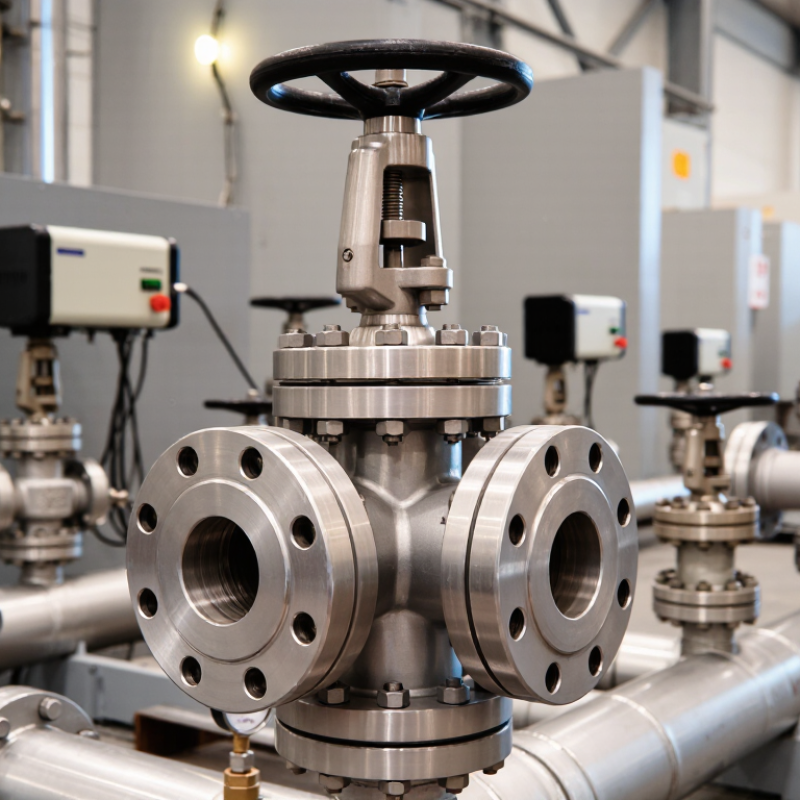
Process control valve manufacturing in China covers casting, forging, machining, assembly, and testing. The exact route depends on valve type, pressure rating, and service conditions. For example, a machined stainless-steel body may need close dimensional checks around its seat and flange faces. Small errors there can affect sealing or installation. Details matter.
A capable factory should document material identification and inspect critical dimensions during production. Pressure-shell and seat-leakage tests help verify performance, while actuator stroke checks can reveal sluggish movement or setup issues. Test methods and acceptance criteria should match the project specification; one generic test report is not enough. Buyers can also review calibration records, traceability documents, and sample inspection reports. A polished brochure can hide gaps in process control. That is worth remembering. Manufacturing quality is not uniform, even within one industrial region, and paperwork alone cannot prove workmanship. A practical assessment pairs document review with a clear discussion of operating temperature, fluid characteristics, and maintenance needs. Those details shape material selection and testing.
Top Process Control Valve Manufacturers in China
How Chinese Valve Manufacturers Are Evaluated
Evaluation should begin with evidence, not catalogue claims. Grand View Research estimated the global control valve market at USD 7.9 billion in 2023 and forecast 6.3% annual growth through 2030. That expanding market makes consistent performance more important. Buyers should compare flow capacity, rangeability, shutoff leakage, pressure ratings, and actuator response against the actual process conditions. Small details matter: a valve may regulate water well but behave differently with hot steam or abrasive slurry. Numbers matter.
Testing and traceability help distinguish robust suppliers from polished sales presentations. IEC 60534 covers industrial-process control valves, while ISO 5208 specifies pressure testing for industrial valves. Ask for test procedures and results tied to the valve’s model and materials, not generic sample sheets. Check whether the manufacturer can trace body and trim materials to inspection records, and whether calibration equipment is maintained. A factory visit can reveal machining, assembly, and testing practices, though one tidy tour is not proof of every batch. Still, gaps remain. Delivery records, service response, spare-part availability, and documented changes deserve scrutiny alongside price. A certificate helps, but it cannot replace application-specific testing or clear technical answers.
Suggested evaluation weights for comparing manufacturers: product quality and certifications, manufacturing capability, testing and inspection, customization, delivery reliability, and after-sales support. These are framework weights, not measured company ratings or market-survey results.
Leading process control valve manufacturers in China are judged by more than production volume. Many supply valves for water treatment, chemical processing, power generation, and other demanding plants. A capable supplier should translate operating conditions into suitable body materials, trim, actuators, and control ranges. That takes clear process data. Engineers may review pressure and temperature limits, fluid chemistry, leakage class, and response time before recommending a design. Shop-floor evidence helps too: machining records, pressure-test reports, calibration certificates, and traceable material documents show how consistently units are built. Ask how a valve performs during repeated cycling, not only how it looks on a drawing. Details matter.
Strong manufacturers often offer application support, configurable designs, and practical commissioning guidance. Still, capabilities vary between factories, even when product catalogs appear similar. Compare relevant certifications, inspection scope, spare-part access, and delivery consistency against the project specification. Site conditions deserve attention. Dust, vibration, corrosive washdown, or limited instrument air can affect actuator selection and maintenance needs. Request drawings and test records for the exact configuration, then clarify any deviations in writing. Not always. A supplier may have strong machining capacity but limited experience with a particular fluid or control duty. That distinction is easy to miss.
Process plants use different valve designs to control flow, pressure, and temperature. Globe valves suit accurate throttling in steam and chemical lines. Rotary ball valves provide tight shutoff and fast response, while characterized balls can regulate flow. Butterfly valves handle large water and utility pipelines with compact, lighter assemblies. Diaphragm valves are useful for corrosive fluids or suspended solids, though their pressure and temperature limits need checking.
The application sets the duty. In a boiler room, a globe valve may modulate steam to a heat exchanger; in a water-treatment plant, a butterfly valve can regulate a wide pipeline. Pneumatic or electric actuators move the valve, and positioners help match movement to the control signal. Small details matter: fluid chemistry, temperature, pressure drop, and seat material can change service life. A valve that looks suitable on paper may perform poorly with abrasive slurry.
Grand View Research’s 2024 Industrial Valves Market report valued the global market at USD 79.4 billion in 2023 and projected 4.8% annual growth through 2030. That broad figure signals varied industrial demand, not a guarantee of performance for any valve type. Selection still depends on measured operating conditions. Sometimes, simpler is safer. In practice, engineers should verify sizing and fail-safe action against the actual process; assumptions deserve a second look.
The table below summarizes process control valve types commonly supplied by manufacturers in China. Size and pressure ranges are indicative examples, not limits for every design; actual specifications depend on valve construction, materials, trim, and applicable standards.
| Valve Type | Control Principle | Common Indicative Size and Pressure Range | Typical Materials | Common Industrial Applications | Key Selection Considerations |
|---|---|---|---|---|---|
| Globe Control Valve | A linear-moving plug varies the flow area; widely used for modulating flow. | Often DN15–DN400; pressure classes commonly include PN16–PN100, depending on design. | Carbon steel, stainless steel, alloy steel; trim may use stainless steel or hard-facing materials. | Steam and boiler systems, chemical processing, refining, power generation, and general process flow control. | Suitable for accurate throttling. Check pressure drop, cavitation, flashing, noise, and required flow characteristic. |
| Segmented Ball Control Valve | A contoured ball segment rotates to regulate flow, combining rotary operation with a shaped control surface. | Often DN25–DN600; pressure ratings vary by body design and connection type. | Carbon steel, stainless steel, and corrosion-resistant alloys; soft or metal seats. | Pulp and paper, wastewater treatment, chemical plants, and services containing suspended solids or fibrous material. | Consider solids content, seat material, shutoff requirements, and the valve’s usable control range. |
| V-Port Ball Valve | A V-shaped opening in the ball provides a more controlled flow area as the valve rotates. | Often DN15–DN300; available pressure ratings depend on body and end-connection design. | Stainless steel, carbon steel, and selected alloys; metal or resilient seats. | General process control, chemical dosing, blending, and applications requiring rotary control with relatively high capacity. | Check media compatibility, leakage class, actuator torque, and whether the required rangeability suits the process. |
| Butterfly Control Valve | A disc rotates in the pipeline to regulate flow; commonly used for larger line sizes. | Often DN50–DN1200 or larger; pressure ratings are design-dependent and commonly lower than those of some globe valves. | Ductile iron, carbon steel, stainless steel; elastomer-lined or metal-seat designs. | Water and wastewater, HVAC, power plants, bulk utilities, and large-volume gas or liquid services. | Evaluate shutoff tightness, disc and seat materials, flow characteristics, operating torque, and available installation space. |
| Eccentric Rotary Plug Valve | An offset plug rotates away from the seat during opening, helping reduce contact and friction. | Often DN25–DN600; pressure and temperature capability depend on materials and seat construction. | Carbon steel, stainless steel, and alloy steel; metal or soft seats. | Oil and gas processing, petrochemicals, power generation, and services with viscous or moderately solids-laden fluids. | Assess erosion and abrasion, shutoff needs, seat design, and the process fluid’s viscosity and solids content. |
| Diaphragm Control Valve | A flexible diaphragm moves against a weir or contoured body to control or isolate the flow. | Often DN15–DN300; generally selected for moderate pressure service, subject to the specific design. | Cast iron, stainless steel, and lined bodies; diaphragm materials may include EPDM, PTFE, or other compatible elastomers and polymers. | Water treatment, chemical handling, pharmaceutical processes, and corrosive or high-purity services when suitable lining is specified. | Confirm diaphragm compatibility, temperature limits, pressure limits, cleanliness requirements, and solids-handling needs. |
| Angle Control Valve | A globe-style plug controls flow through a body with an angled inlet and outlet. | Often DN15–DN300; pressure ratings depend on body construction and process conditions. | Carbon steel, stainless steel, and alloy steel; specialized trim may be used for severe service. | Steam systems, high-pressure letdown, flashing or erosive services, and piping layouts where a change in flow direction is useful. | Review outlet piping, flow direction, erosion risk, noise, cavitation, and whether the body geometry suits the service. |
Selecting a Chinese process control valve manufacturer starts with the duty, not the catalogue. Record the fluid, pressure, temperature, flow range, shutoff requirement, and failure position. Then ask for sizing calculations, material certificates, and test records tied to the proposed valve configuration. UNIDO’s Industrial Development Report 2024 notes that China contributed about 31.8% of global manufacturing value added in 2022. That scale is useful context, not proof of any factory’s quality. Check the actual production site, calibration records, and traceability from material heat number to finished valve. Details matter.
Compare suppliers using the same technical specification. Review leakage testing against the applicable standard, actuator response, positioner calibration, and documented inspection procedures. Request a witnessed factory acceptance test when the service is critical. The World Bank’s 2023 Logistics Performance Index gave China an overall score of 3.7 out of 5; still, national logistics data cannot predict a supplier’s delivery performance. Ask for recent lead-time records and confirm spare-parts availability in writing. I would also speak with a reference customer using similar pressure and media conditions. One awkward gap remains: brochures rarely show how a factory handles a failed test. Ask for a sample nonconformance report and corrective-action record. Then compare evidence, not promises.