
Irrigation Parts determine whether water reaches roots steadily or disappears through leaks, clogged emitters, and uneven pressure. A garden hose may look simple, but filters, valves, tubing, connectors, and sprinklers shape system performance. Small parts matter.
When components fit the site, water reaches plants with less runoff and fewer dry patches. A clean filter helps protect narrow driplines from sediment. Correctly sized tubing can maintain even flow across a vegetable bed. Pressure regulators and timers can help prevent overwatering, but they cannot fix poor placement or neglected maintenance. Those details are easy to overlook.
Choosing reliable Irrigation Parts starts with understanding the water source, garden layout, plant needs, and operating pressure. A long line of small emitters may behave differently from a short one, even at the same faucet. Product specifications and manufacturer guidance offer useful starting points, but performance should also be checked in the field. Measure flow, inspect connections, and watch how water spreads after the system runs. Sometimes the plan needs adjusting. Efficient watering depends on compatible components and regular checks, not simply on buying more equipment. This guide explains common part functions, selection considerations, and maintenance practices that support consistent watering. Even a well-designed setup has limits. Soil and weather can change the results.
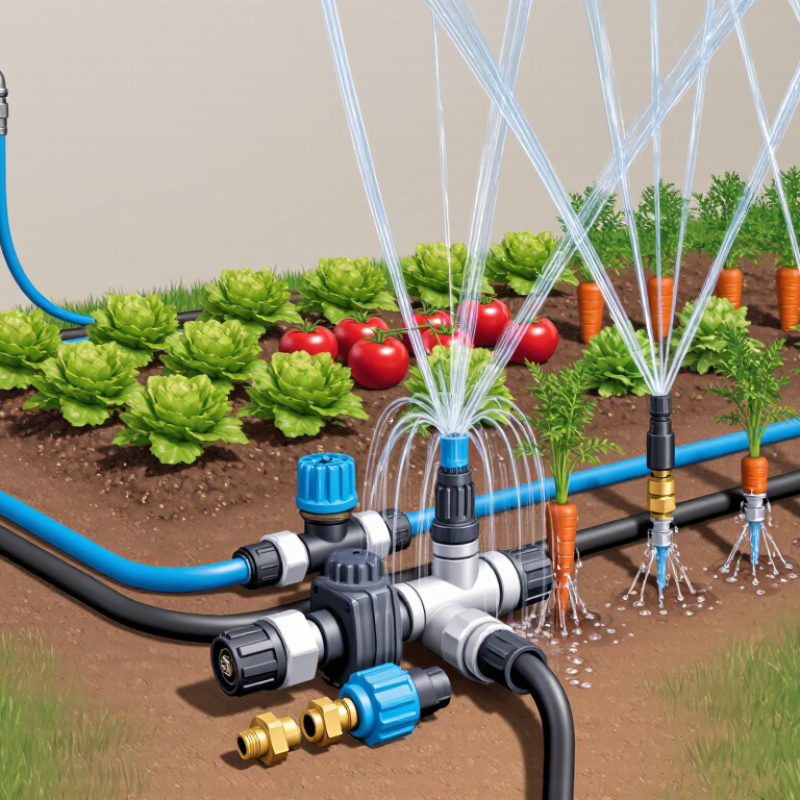
An irrigation system moves water from a supply line to plants through connected parts. A filter catches grit that could clog narrow passages. A pressure regulator helps keep flow within a suitable range. Pipes and tubing carry water across the garden, while fittings join sections and direct water around beds. Small parts matter.
Valves open or close water flow, often following a timer or controller. At the outlet, drip emitters release water slowly near plant roots; spray heads distribute it across a wider area. Each outlet suits different plants and layouts. If pressure is uneven, some emitters may drip weakly while nearby ones spray too hard. The causes can be less obvious than expected.
Tips: Check filters and emitters when flow changes. Look for damp spots near fittings, and flush tubing after repairs. Run the system briefly and watch each zone. A careful check can reveal problems, though one inspection may not catch every intermittent clog.
Water travels through an irrigation system in a controlled path. It usually leaves a supply line, passes through a filter, and reaches a valve that opens for a watering zone. From there, pipes carry it to sprinklers or drip emitters. Each part affects the next. A clogged filter can reduce flow, while a poorly sized pipe may cause uneven pressure across the zone. Small details matter.
At the outlets, water is released as droplets or a spray. Sprinkler heads need enough pressure to cover their intended area; drip emitters depend on steady flow to wet the soil near plant roots. A pressure regulator can help protect low-pressure components, but it cannot fix every layout problem. The system may look sound on paper, yet plants at the far end can receive less water. That mismatch is easy to overlook.
Checking several outlets while the system runs can reveal it: compare spray distance, or see whether emitters deliver similar amounts over a set time. Soil type, slope, and pipe length also affect how water moves and soaks in.
There is no perfect layout. Small adjustments may still be needed after installation.
Irrigation efficiency depends on more than the watering schedule. A clean filter protects small emitter openings from grit, while pressure regulators help deliver steadier flow across a bed. Without them, one plant may receive a slow drip and another a short, forceful spray. Small parts matter. Leaking valves and cracked connectors also waste water between watering cycles, often where nobody notices.
The U.S. Environmental Protection Agency’s WaterSense program reports that a WaterSense-labeled irrigation controller can save an average home nearly 8,800 gallons of water annually. Controllers help adjust watering to local conditions, but they cannot fix clogged nozzles or poor pressure. Matching sprinkler heads or drip emitters to the planting area matters, too: a narrow vegetable bed rarely needs the same spray pattern as a lawn. Even well-chosen components need seasonal checks; I’d inspect them after winter, then again when dry spots appear.
Tips: Run each zone for a few minutes and watch the soil, not just the spray. Clear blocked emitters, check for puddles near valves, and compare flow at the start and end of long lines. If pressure seems uneven, measure it before replacing parts. It is easy to blame the timer. Sometimes the pipe layout is the real problem.
Typical irrigation application efficiency by watering method
Indicative efficiency values are about 60% for surface irrigation, 75% for sprinkler irrigation, and 90% for drip irrigation. Well-maintained filters, pressure regulators, pipes, and emitters help deliver water more evenly and reduce losses. Actual efficiency varies with system design, maintenance, soil, and operating conditions.
Efficient watering depends on parts working together, not on a single high-spec component. Pressure, filtration, pipe sizing, and emitter spacing all shape how evenly water reaches roots. Too little pressure can leave the far end of a drip line dry. Too much may create uneven flow or damage fittings. Small differences matter. The USGS 2015 water-use report recorded 118,000 million gallons of irrigation withdrawals per day in the United States. That represented about 42% of freshwater withdrawals. FAO’s AQUASTAT database estimates agriculture accounts for roughly 70% of global freshwater withdrawals. These figures show why small performance losses deserve attention, though they do not measure losses on any individual farm.
Water quality and maintenance also change performance over time. Fine sediment, algae, or mineral deposits can gradually clog emitters, even when the filter looks clean. Check pressure at both the system inlet and the far end, then compare output from several emitters using a measuring cup. Wind and heat matter, too: spray can drift, while hot soil dries faster between watering cycles. A useful reminder: component specifications cannot capture every field condition. And a clean filter is not proof of uniform flow. Inspecting parts during operation can reveal problems that a quick visual check misses.
| Irrigation Part | Role in Efficient Watering | Performance Factor | Practical Guideline | What Can Go Wrong |
|---|---|---|---|---|
| Pump | Supplies the flow and pressure needed by the irrigation system. | Flow rate, total dynamic head, and pump condition. | Choose a pump to meet the system’s required flow at its calculated operating pressure, accounting for elevation and pipe friction losses. | An undersized pump may cause poor coverage; an oversized or poorly controlled pump can waste energy and create excessive pressure. |
| Filter | Removes particles that could block emitters, nozzles, and narrow passages. | Filter type, screen or media rating, and cleaning condition. | Match filtration to the water source and the irrigation-part specifications. A 120-mesh screen is commonly used in some drip systems, but requirements vary. | An unsuitable or clogged filter can restrict flow; inadequate filtration can lead to emitter clogging and uneven watering. |
| Pressure regulator | Keeps downstream pressure within the range required by emitters or sprinklers. | Inlet pressure, outlet setting, flow range, and regulator condition. | Set pressure according to the irrigation-part specifications and check it while the system is operating. | Excess pressure can increase leakage or alter discharge; insufficient pressure can reduce flow, throw distance, or coverage. |
| Drip emitter | Delivers measured water close to plant roots. | Operating pressure, clogging, emitter spacing, and flow-rate consistency. | Use emitters suited to the system pressure and water quality. Pressure-compensating models help maintain more consistent flow within their specified pressure range. | Blocked or mismatched emitters can leave plants under-watered or cause uneven application along a line. |
| Sprinkler head or nozzle | Distributes water over a designated area. | Nozzle condition, operating pressure, spacing, and wind exposure. | Follow the nozzle’s pressure and spacing specifications; arrange sprinkler coverage so adjacent spray patterns overlap as recommended for the equipment. | Clogging, incorrect pressure, or poor spacing can create dry patches, misting, runoff, or water drift. |
| Pipe and tubing | Carries water from the supply to valves, zones, and outlets. | Pipe diameter, length, material, connections, and total flow. | Size pipe for the zone’s flow and allowable pressure loss. Inspect joints and flush lines when needed. | Undersized or damaged lines can cause pressure loss, leaks, and reduced flow at downstream outlets. |
| Valve | Controls water flow to a zone or section of the system. | Correct sizing, operating pressure, debris, and electrical or manual operation. | Choose a valve compatible with the zone flow and system pressure, and keep its inlet and control components free of debris. | A valve that fails to open, close, or seal properly can interrupt watering or waste water through leakage. |
| Controller and sensor | Schedules irrigation and can adjust watering in response to site conditions. | Program settings, sensor placement, battery or power, and seasonal changes. | Set runtimes to suit soil, plant needs, and local weather; check sensors and update schedules as conditions change. | Incorrect schedules or faulty sensor readings can cause overwatering, underwatering, or unnecessary operation. |
| Backflow preventer | Helps protect the potable water supply from reverse flow and contamination. | Correct device selection, installation orientation, and maintenance. | Use a device appropriate to the system and local plumbing requirements; arrange installation and testing as required by local rules. | Incorrect installation or a failed device can compromise water-supply protection or restrict system operation. |
Note: Operating pressures, filtration ratings, and flow requirements depend on the specific equipment and site. Always check product specifications and local requirements before selecting or adjusting irrigation parts.
Efficient watering depends on more than run time; clean, working parts help water reach the intended soil. A clogged filter can reduce flow across a whole zone, while a cracked fitting may send water onto a path. Small faults matter. Check filters, valves, connectors, and emitters regularly, especially after repairs or long periods of disuse. Look for damp patches, loose joints, and plants that remain dry despite a scheduled cycle. Uneven growth can be an early clue.
Maintenance works best when it follows a simple routine. Flush lines when sediment appears, and clean screens gently so their mesh is not damaged. Replace worn seals before they begin leaking. Run each zone briefly and watch the spray pattern; blocked nozzles may produce a thin stream or leave dry arcs. It is easy to overlook one emitter at the far end of a bed. Keep notes on repairs and unusual flow changes, but treat them as clues, not proof of a single cause. Soil, slope, and pressure can all affect coverage. After adjusting a part, check the area again on the next watering cycle.