
China’s top low-profile CPU cooler manufacturers serve builders who need effective heat control in tight spaces. A compact cooler may sit beneath a low case panel, beside tall memory modules, or inside a small-form-factor computer. Clearance is not a minor detail. It determines what fits.
A Low Profile Cpu Cooler must balance height, airflow, noise, and heat dissipation. Buyers should compare measured dimensions with their case limits, then check memory clearance, socket compatibility, and the processor’s real workload. A slim heatsink with a dense fin stack can look capable, but restricted airflow may limit its performance. Fan size and speed matter, too. Small differences show up under sustained rendering or gaming.
“Compact cooling is a balance between available space, airflow, and heat load,” says thermal-design specialist Jakob Dellinger, a practical principle for evaluating this category. Manufacturers in China vary in engineering resources, testing practices, and quality control. Brand claims alone are not enough. Look for clear compatibility tables, repeatable thermal results, documented noise conditions, and responsive technical support. Ask how tests were run. Room temperature can change the outcome.
The comparison ahead considers product range, manufacturing capability, customization, and evidence behind performance claims. It also recognizes a limitation: published test results do not always reflect every case or processor. Buyers should verify fit before ordering. Small cooler. Tight margins. A careful review can separate genuinely useful designs from models that merely appear compact.
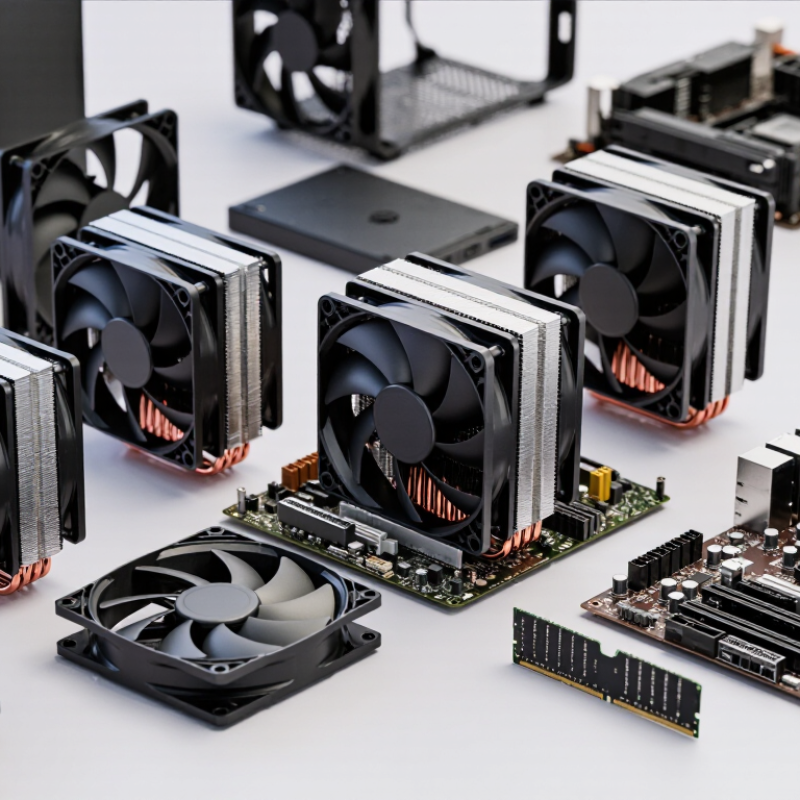
A low-profile CPU cooler is a compact heatsink-and-fan assembly designed for computers with limited vertical clearance. It sits closer to the motherboard than a typical tower cooler, making it useful in small desktop cases and slim builds. Many models direct air downward across the heatsink, helping cool nearby motherboard components as well. The label can mislead. Cooler height alone does not tell you how well it will handle heat.
Inside, a metal base transfers heat from the processor into fins, sometimes through heat pipes. A fan moves air between those fins, but its size and speed affect both cooling and noise.
Check the cooler’s listed height against the case’s maximum CPU-cooler clearance, then consider RAM height and motherboard layout. Clearance matters. A fan can fit on paper yet press against tall memory modules.
Also compare the cooler’s rated thermal capacity with your processor’s expected power draw; manufacturer ratings are useful, but real temperatures depend on airflow, room temperature, and workload.
A low-profile design may be the practical choice, not the quietest one. Small cases can trap warm air.
That part is easy to overlook.
Design begins with a tight envelope. A low-profile CPU cooler must fit beneath nearby memory, graphics cards, and case panels. Engineers measure these clearances before choosing the heatsink shape, fan size, and mounting hardware. Small mistakes here can make a well-cooled design unusable.
The base is commonly made from copper or aluminum, then finished to contact the processor evenly. Heat pipes are bent and positioned to carry heat toward thin fin stacks. Their placement affects both heat transfer and airflow. Crowded fins may improve surface area but restrict the fan. It is a trade-off. Prototypes are checked for dimensions, mounting pressure, and thermal performance under controlled loads. Engineers also listen for vibration and measure fan noise, since a compact cooler sits close to other components. Still, lab results do not perfectly predict every cramped case. That part deserves more thought.
Manufacturing relies on repeatable steps: forming fins, joining them to the base or heat pipes, and inspecting each assembly. A small gap or uneven joint can reduce heat flow. Final tests help catch these faults, though inspection is never flawless. There is room to improve. A cooler that performs well on paper may still be awkward to install, so practical fit checks matter as much as the thermal figures.
China’s low-profile CPU cooler manufacturers serve compact desktops, small-form-factor workstations, and space-limited office systems. Their products often combine a shallow fin stack with a compact fan, leaving room for memory modules and nearby components. Some factories handle machining, fin forming, heat-pipe assembly, and fan integration in-house; others rely on specialist suppliers. This difference can affect lead times and quality control.
Fit matters. Buyers should check cooler height, socket compatibility, mounting pressure, and clearance around the motherboard. A cooler’s advertised thermal capacity is only a guide. Case airflow, processor power limits, and fan speed also shape real-world temperatures. Ask suppliers for test conditions, noise readings, and sample units, then compare results using the same setup. Small details count.
Manufacturing strength is not just about output volume. Consistent fin spacing, flat contact surfaces, secure fasteners, and repeatable assembly are practical signs to inspect. Request drawings and production samples before confirming a custom design. Some suppliers may offer quick revisions, but that should be verified rather than assumed. A small test order can reveal issues that a polished specification sheet misses. Even careful testing has limits; results from one compact case may not transfer to another.
China’s low-profile CPU cooler manufacturers differ less by headline specifications than by engineering priorities. Some focus on compact dimensions for slim cases, while others emphasize heat dissipation under sustained workloads. Fin spacing, base contact, and heat-pipe placement can matter more than a large advertised fan diameter.
For buyers, ask for verified cooler height, socket compatibility, and clearance around memory modules. A sample build can reveal conflicts that a drawing misses. Fit is unforgiving. Fan performance also varies: blade shape and bearing quality affect noise at low speeds. Check test conditions, including processor power, ambient temperature, and case airflow, before comparing thermal figures. Numbers need context.
Manufacturing capabilities range from standard catalog products to custom tooling, surface finishes, and packaging. Stronger suppliers document material specifications and repeatable inspection steps, such as fin alignment and base flatness. Request batch-level test records when consistency matters. Still, a polished specification sheet cannot prove quiet operation in every case. I would test a production sample; this step is often skipped, and that can be costly.
Comparison of common supplier capability profiles, not a company ranking. Actual specifications, production capacity, certifications, and lead times should be verified directly with each supplier.
| Supplier Profile | Typical Strength | Low-Profile Design Focus | Common Trade-Off | Questions to Verify |
|---|---|---|---|---|
| OEM-focused supplier | Manufacturing to a buyer’s drawings, specifications, or approved reference design. | Consistent dimensions, repeatable assembly, and adaptation to a defined chassis envelope. | Design changes may require buyer-provided engineering details and validation. | Can the supplier provide tolerance reports, sample approval records, and production-control documentation? |
| ODM-focused supplier | In-house product development and options for adapting an existing cooler platform. | Balancing cooler height, fin area, fan placement, and mounting hardware for a compact system. | Customization may be limited by the existing platform or tooling. | Which dimensions, materials, mounting parts, and fan specifications can be changed? |
| Thermal-engineering-focused supplier | Emphasis on thermal design, airflow evaluation, and application-specific testing. | Heat-pipe layout, fin geometry, fan curve, and clearance around nearby components. | Performance results can differ significantly with the test setup and system airflow. | Are test results provided with ambient temperature, workload, fan speed, noise, and mounting details? |
| Cost-focused volume supplier | Production-oriented designs intended to control part count and manufacturing complexity. | Compact extruded or stamped-fin constructions and standardized fan or mounting components. | Fewer material, finish, acoustic, or customization options may be available. | What inspection criteria, component substitutions, and change-notification procedures apply? |
| Export-oriented supplier | Experience preparing product documentation, packaging, and shipments for overseas buyers. | Clear compatibility information, installation instructions, and packaging suited to the target market. | Export experience alone does not establish cooling performance or product compliance. | Which product-specific reports, declarations, labels, and packaging tests are available? |
| Factor | Why It Matters | Useful Comparison Data |
|---|---|---|
| Overall height and clearance | The cooler must fit the case and avoid interference with memory, motherboard components, and the side panel. | Maximum assembled height, footprint, RAM clearance, and mounting dimensions. |
| Heat-sink materials and construction | Material and geometry affect heat spreading, mass, cost, and manufacturability. Copper generally conducts heat better than aluminum, while aluminum is lighter and commonly used for fins. | Base and fin materials, heat-pipe count and dimensions, joining method, and surface finish. |
| Fan and acoustics | Fan size, speed, airflow path, and control behavior influence cooling and operating noise. | Fan dimensions, speed range, connector, rated airflow, noise test method, and replacement availability. |
| Socket mounting and compatibility | Mounting hardware must match the motherboard socket and provide suitable contact pressure. | Supported socket list, included brackets, backplate requirements, and installation instructions. |
| Thermal test method | Cooling results are meaningful only when the test conditions are stated and comparable. | Test processor or heater, power level, ambient temperature, fan setting, case airflow, and measurement method. |
| Quality and production control | Consistent dimensions, assembly, and fan operation matter for repeatable production. | Incoming inspection, in-process checks, final inspection, traceability, and defect-handling process. |
How to Evaluate and Select a Low-Profile CPU Cooler Manufacturer
Canalys estimated global PC shipments reached 262.7 million units in 2024, up 3.8% from 2023. That scale makes consistent production important, not just a convincing prototype. Ask manufacturers for batch inspection records, production capacity, and documented defect rates. A polished sample can hide uneven fin spacing or weak solder joints. Request several units from different production batches.
Check engineering evidence, too. Require a compatibility matrix covering socket type, memory clearance, and case height, with measurements rather than vague claims. Ask for thermal test conditions: processor power, ambient temperature, fan speed, and noise measurement distance. Compare results only when test setups match. Fit matters. A cooler that clears a memory module by one millimeter may still vibrate against it after installation. ISO 9001 certification can support confidence in quality processes, but it does not prove cooling performance. Review the actual test data.
A supplier should also provide material specifications, tolerance limits, warranty terms, and a clear process for handling failures. Ask how performance changes when dust builds up or a fan slows; many evaluations overlook these ordinary conditions. I would not trust one impressive temperature chart alone. Independent retesting costs time, and sometimes the first result will not repeat. That is useful evidence, not a reason to skip verification.
This chart presents a suggested evaluation framework, not measured market statistics. Give priority to cooling performance and case compatibility, then assess noise, build quality, customization, and supplier reliability. Adjust the weights to suit your thermal, space, and purchasing requirements.