China’s fire-protection equipment sector is expanding with industrial construction, logistics parks, and high-rise development. Fortune Business Insights valued the global fire protection systems market at approximately USD 78.98 billion in 2023. Its report projects continued growth through 2032, driven by stricter safety expectations and infrastructure investment. These figures do not measure Post Indicator Valve sales directly. However, they show the wider market behind this essential equipment.
A Post Indicator Valve gives technicians a visible way to check whether a buried or enclosed water-supply valve is open. The indicator target may show “OPEN” beside a warehouse wall, a pump room, or a fenced fire-service connection. That simple detail matters during inspections and emergencies. NFPA 13 emphasizes accessible control valves, clear identification, and supervision where required. UL 262 and related approval requirements also influence product selection, testing, and manufacturing quality.
Fire-protection engineer Matt Klaus has explained, “A control valve is useful only when its position can be verified.” The wording is practical, even if real sites are rarely perfect. A locked enclosure, faded lettering, or a damaged target can undermine a compliant design. This guide reviews China’s top Post Indicator Valve manufacturers through product range, certification evidence, manufacturing capability, material control, and service performance. Company claims are not treated as proof. Buyers should verify current listings, test reports, operating torque, coating quality, and project references before making a decision. Rankings can change. That is worth remembering.

A post indicator valve is a fire protection control valve with a visible operating mechanism. It usually stands above ground or beside an exterior wall. The stem connects to a valve installed underground or inside a building. A target window shows whether the valve is open or closed.
Its main function is simple but critical. It allows trained personnel to control water flow to a sprinkler or hydrant system. The indicator also provides a quick visual check during routine inspections. When the target reads “OPEN,” water should remain available to the protected area. When it reads “CLOSED,” the system may lose protection. That matters.
In field inspections, technicians check the position, housing, stem, fasteners, and surrounding clearance. They also look for corrosion, impact damage, blocked access, or a stiff operating wheel. A reliable installation keeps the indicator easy to see in rain, darkness, or winter conditions. The valve size, pressure rating, connection method, and buried depth must match the system design. A common mistake is judging the indicator alone. Its display may look correct while the underground valve remains partly closed. Functional testing and recorded inspection results provide stronger evidence. Still, inspections can miss problems when access is poor. Better lighting and clearer records often reveal small faults before they become serious.

China Top 10 Post Indicator Valve Manufacturers should be judged by evidence, not catalogue rankings. The key question is simple: can each valve perform under pressure, corrosion, and repeated operation? For fire protection applications, buyers should check compliance with NFPA 24, UL 262, FM approval requirements, and applicable AWWA C509 or C515 standards. These references define pressure resistance, materials, dimensions, and operational reliability. ISO 9001 certification also matters. The ISO Survey 2022 recorded more than 1.2 million ISO 9001 certificates worldwide, but certification alone cannot prove product quality.
Look closely at test records. Ask for hydrostatic pressure results, leakage limits, coating thickness, and cycle-test data. A reliable factory should trace castings, stems, seals, and final inspections through batch numbers. It should also provide calibration records for pressure gauges and torque equipment. NFPA’s U.S. Fire Loss 2022 report recorded 1,504,500 fires, showing why fire-system components require dependable control. Small details matter. A stiff handwheel is not a minor defect. During a plant audit, sample several finished valves, not only the best-looking unit. Compare drawing tolerances with the delivered product, and verify whether third-party approvals cover the exact model. A certificate may cover one size or material only. That limitation is easy to miss, and buyers sometimes discover it too late. Supplier evaluation should include complaint response time, spare-part availability, and independent retesting. Low price can help budgets, but incomplete documentation creates hidden risk.
Manufacturer-neutral evaluation framework for post indicator valve suppliers. The criteria below use recognized fire-protection, valve, quality, testing, and supply-chain standards rather than displaying company or brand data.
| No. | Evaluation Dimension | Relevant Standard or Technical Benchmark | Suggested Weight | |
|---|---|---|---|---|
| 1 | Product Certification and Listing | For fire-protection applications, verify conformity with the applicable requirements of UL 789 for indicator posts and the relevant project approval requirements. | Request current certificates, certification scope, model numbers, manufacturing-site details, certificate validity, and confirmation that the supplied configuration matches the listed product. | 18% |
| 2 | Valve and Post Design Compliance | The post assembly should be compatible with the specified gate valve and installation arrangement. Common project references include NFPA 24 for private fire service mains and AWWA C509/C515 for resilient-seated gate valves where applicable. | Review certified drawings, stem-extension dimensions, operating direction, target valve compatibility, mounting details, clearances, and installation instructions. | 14% |
| 3 | Pressure and Leakage Testing | Testing should follow the applicable product specification and recognized valve test procedures, such as ISO 5208 or EN 12266-1 when specified by the purchaser. | Check hydrostatic shell-test pressure, seat-test pressure, test duration, allowable leakage, calibrated equipment records, and batch-level test reports. | 14% |
| 4 | Materials and Corrosion Resistance | Materials should be selected for buried or outdoor fire-service conditions, including corrosion-resistant coatings, suitable ductile iron or steel components, stainless-steel hardware where specified, and approved elastomers compatible with the service. | Verify material certificates, coating system and thickness, coating adhesion or holiday-test records, elastomer grade, fastener material, and documented environmental limitations. | 12% |
| 5 | Manufacturing Quality Management | A documented quality-management system conforming to ISO 9001 is a strong baseline for design control, purchasing, production, inspection, nonconformance handling, and corrective action. | Request a valid ISO 9001 certificate, audit scope, process-control plan, inspection and test plan, nonconformance procedure, and recent internal or third-party audit records. | 10% |
| 6 | Traceability and Documentation | Each shipment should be traceable from raw material and component batches through assembly, inspection, testing, final release, and packing. | Evaluate heat or batch numbers, serial or lot identification, inspection records, test certificates, bills of materials, nameplate information, operation manuals, and spare-parts lists. | 10% |
| 7 | Operating Reliability and Human Factors | The post should provide clear open/closed indication, secure operating access, durable target markings, tamper resistance, and consistent operation over the specified temperature and environmental range. | Review operating-torque data, cycle-test results, visibility of indication, locking arrangements, accessibility requirements, field-service instructions, and maintenance procedures. | 8% |
| 8 | Production Capacity and Delivery Control | A qualified supplier should demonstrate stable production capacity, controlled subcontracting, documented lead times, and the ability to maintain quality across repeat orders. | Review production-flow information, capacity statements, realistic lead-time records, order-status procedures, supplier controls, packaging specifications, and on-time-delivery performance. | 6% |
| 9 | Inspection, Testing, and Third-Party Support | Critical inspection and testing equipment should be calibrated and traceable to recognized measurement standards. Independent inspection may be required for safety-critical or export projects. | Verify calibration certificates, inspection personnel qualifications, factory acceptance-test procedures, third-party inspection cooperation, and corrective-action response time. | 4% |
| 10 | Technical Support and Lifecycle Service | The supplier should provide installation guidance, commissioning support, maintenance information, replacement-part availability, and technical responses consistent with applicable fire-protection inspection and maintenance practices such as NFPA 25. | Assess the quality of manuals, drawing support, response times, warranty terms, spare-parts policy, complaint handling, field-service capability, and documented reference installations. | 4% |
China Top 10 Post Indicator Valve Manufacturers are increasingly evaluated by more than production volume. Buyers now examine pressure testing, material traceability, coating quality, and export experience. The 2024 Grand View Research report valued the global industrial valves market at approximately USD 78 billion in 2023. It also identified infrastructure investment and fire-safety upgrades as important growth factors. These trends support stronger demand for reliable post indicator valves in China.
A practical top-ten assessment should compare factory capacity, inspection systems, certification records, and delivery performance. Manufacturers serving municipal water networks usually provide wall-post and yard-type designs, with visible targets and lockable operating mechanisms. Each unit should receive hydrostatic testing before shipment. NFPA 13 guidance also makes installation compatibility and access clearance important. The 2024 MarketsandMarkets analysis expects the global fire protection systems market to expand steadily through 2029, creating opportunities for export-oriented Chinese producers.
Still, no ranking is perfect. Some suppliers publish impressive output figures but offer limited field data. That matters. Buyers should request valve test reports, coating thickness records, and sample traceability. A short factory audit can reveal inconsistent machining, weak labeling, or delayed spare parts. The strongest manufacturers combine automated production with experienced inspectors. Even then, performance may vary between batches. Careful verification remains necessary.
China Top 10 Post Indicator Valve Manufacturers: Product Range, Certifications, and Manufacturing Capabilities
China’s leading post indicator valve manufacturers serve fire protection, municipal water, and industrial networks. Grand View Research estimates the global industrial valves market reached about USD 78 billion in 2023, with steady growth expected through 2030. This demand increases pressure on suppliers to prove product consistency, not only pricing.
A capable manufacturer should offer OS&Y and NRS gate valves, wall posts, buried service indicators, target plates, and extension stems. Ductile iron bodies, stainless steel stems, and corrosion-resistant coatings support outdoor use. Product documentation should identify pressure ratings, face-to-face dimensions, operating torque, and temperature limits. Small details matter.
Certifications need careful review. UL and FM listings apply to specific valve designs and sizes, while ISO 9001 confirms quality management processes. AWWA C509 or C515 compliance may support municipal applications. NFPA 24 is also relevant to private fire service mains, but it does not replace product certification. This distinction is often overlooked.
Manufacturing capability should include pattern control, CNC machining, hydrostatic testing, coating inspection, and batch traceability. Independent laboratories can verify pressure and leakage performance. According to a 2024 industrial valve market analysis by Mordor Intelligence, Asia-Pacific remains a major production region, supported by expanding infrastructure investment. Yet factory scale alone proves little. Some suppliers still provide incomplete test records, and buyers should question that weakness.
The chart shows standardized EN nominal pressure classes commonly used when specifying industrial valve bodies and assemblies. Post indicator valve product ranges typically include resilient-seated gate valves, butterfly valves, check valves, supervisory switch assemblies, grooved or flanged end connections, and outdoor indicator posts. Manufacturing and export qualification is commonly supported by ISO 9001 quality systems, API 6D or API 598 testing practices where applicable, ISO 5208 pressure testing, and CE/PED requirements for relevant European-market applications.
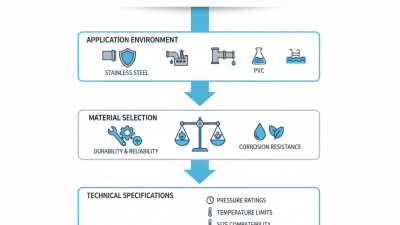
Selecting the right Chinese post indicator valve manufacturer requires more than comparing prices. Start with the valve’s service conditions. Check pressure rating, temperature range, body material, coating, and connection dimensions. A ductile iron body may suit many water systems, while corrosive environments need stronger protection. Small details matter. Ask for complete drawings and material specifications before approval.
In real project reviews, a polished catalog can hide weak quality control. Request production samples, inspection records, pressure-test reports, and traceability documents. Confirm whether testing follows recognized standards, such as UL, FM, ISO, or applicable local requirements. Review the manufacturer’s machining accuracy and assembly process. Thread damage, poor coating, or stiff operation can create problems during installation. Factory experience matters, but it should be supported by evidence.
Tips: Compare at least three manufacturers using the same technical checklist. Ask about lead time, spare parts, packaging, and after-sales support. Clarify customization limits early. A lower quotation may exclude testing or protective treatment. Also, do not rely only on online rankings. Contact previous project references when possible. I would inspect a sample before placing a large order, even when the documents look complete. That extra step costs time, but it can reveal practical weaknesses.