What is Plastic Injection Mold and How Does It Work?
In the world of manufacturing, the "Plastic Injection Mold" process plays a critical role. With its ability to create complex shapes, it is widely used across various industries. Dr. Emily Johnson, a leading expert in plastic manufacturing, once stated, "Plastic Injection Molds are the backbone of efficient production." Her insight highlights the significance of this technology.
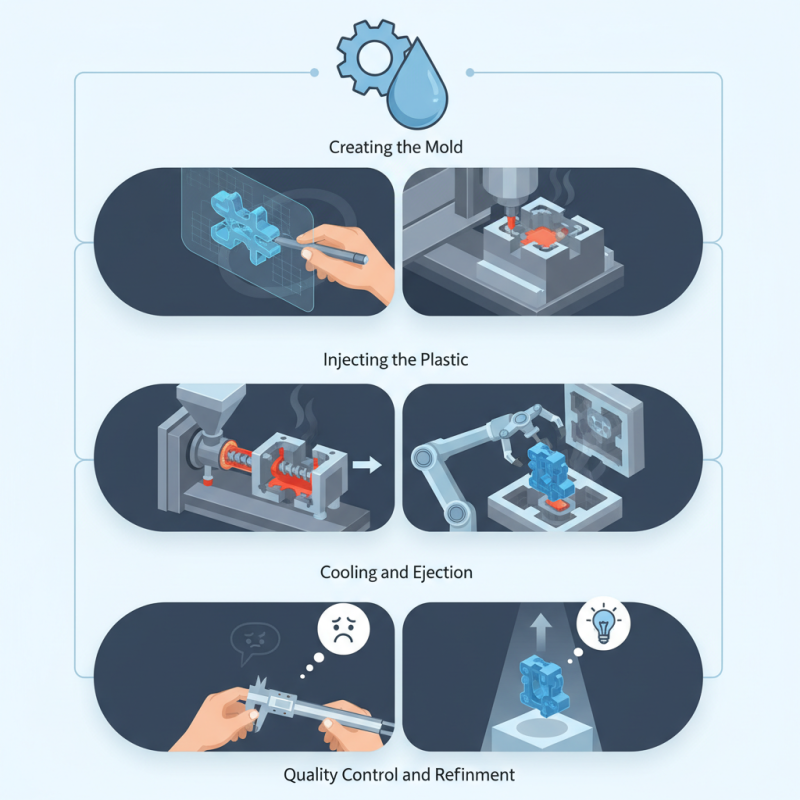
The process begins with creating a mold. This mold is a precise replica of the desired product. Heated plastic is injected into the mold under high pressure. After cooling, the mold opens to reveal the finished product. However, it's important to note that not every mold design succeeds on the first attempt. Miscalculations can lead to defects, revealing that experience is key in this industry.
Often, manufacturers face challenges in achieving dimensional accuracy. A single mistake during the mold-making process can result in wasted time and resources. Continuous improvement and learning from past errors are vital. Ultimately, understanding the nuances of the "Plastic Injection Mold" process is essential for optimal production efficiency.
What is Plastic Injection Molding?
Plastic injection molding is a manufacturing process that creates products by injecting molten material into a mold. This method is widely used to produce a variety of plastic items, from household goods to automotive parts. The process starts with plastic pellets, which are heated until they melt. Once at the right temperature, the molten plastic is injected into a carefully designed mold under high pressure.
After cooling, the mold opens, and the solidified product is ejected. The precision of this method is notable, offering detailed shapes and smooth finishes. However, it requires careful calibration. A small error in temperature or timing can cause defects. For example, an uneven cooling rate may lead to warping. Additionally, mold design is critical, as complex designs can complicate production and increase costs.
While plastic injection molding offers efficiency, it also presents challenges. Creating a new mold can be expensive and time-consuming. Furthermore, the environmental impact of plastic waste is a growing concern. Manufacturers are exploring biodegradable options to address this issue. Balancing efficiency, cost, and sustainability is an ongoing challenge for the industry.
What is Plastic Injection Mold and How Does It Work? - What is Plastic Injection Molding?
| Dimension | Description |
| Material | Commonly used materials include thermoplastics like ABS, polycarbonate, and polypropylene. |
| Process Steps | The process includes clamping, injection, cooling, and ejection of the molded parts. |
| Cycle Time | Typical cycle times range from 15 to 120 seconds depending on the part size and complexity. |
| Applications | Used in automotive, consumer goods, electronics, and medical equipment manufacturing. |
| Advantages | High efficiency, low waste, capability for complex geometries, and reproducibility of parts. |
| Limitations | High initial tooling costs and less economical for small production runs. |
The Components of a Plastic Injection Mold
A plastic injection mold consists of several key components that work together to produce precise plastic parts. The mold typically includes a cavity, core, and injection system. The cavity forms the outer shape of the product, while the core creates internal features. The injection system, which contains the nozzle and runner system, is responsible for delivering molten plastic into the mold.
According to the "2019 Global Injection Molding Market Report," the global market size was valued at approximately $322 billion. This underscores the mold's importance in mass production. However, many manufacturers face challenges with mold maintenance and design. Poorly designed molds can lead to defects, slow production rates, and increased costs. It's crucial to invest in quality mold design.
Cooling channels are another critical element. They regulate the temperature during the molding process. Optimal cooling can significantly enhance cycle times. Yet, balancing cooling efficiency with the complexity of mold design is a common struggle. This can lead to longer production times and reduced efficiency, prompting manufacturers to rethink their approaches.
The Injection Molding Process Explained
The injection molding process is a fascinating method used to create plastic parts. It begins with heated plastic pellets. These pellets are fed into a barrel and melted into a thick liquid. The liquid plastic is then injected into a mold cavity under high pressure. This part of the process is crucial; even small errors can lead to defects.
Once injected, the plastic cools and hardens in the mold. This stage requires careful temperature control. If the mold is too cool, the plastic doesn't fill completely. If it's too hot, the shape may not hold. There’s a fine balance to achieve.
After cooling, the mold opens, and the solidified part is ejected. Sometimes, the ejection process can cause marks or imperfections. It's essential to refine the mold design and the injection parameters to improve quality. Observing these details can lead to better products. Each cycle of this process teaches us something new. It encourages continual improvement and innovation in design and production.
Applications of Plastic Injection Molding in Various Industries
Plastic injection molding is a powerful technique used in many industries. From automotive parts to consumer goods, its applications are vast. This method allows for the mass production of precise plastic components quickly and efficiently. Companies leverage this technology to create everything from intricate phone cases to robust automotive dashboards.
Tips for success:
- Ensure proper temperature controls. Too hot or too cold can ruin the product.
- Regular maintenance of machinery is crucial. A well-maintained machine produces better-quality items.
- Always evaluate design specifications. Often, a minor tweak can enhance manufacturability.
Mistakes can happen. Sometimes designs do not translate well into molds. This can lead to costly waste and delays. It’s essential to reflect on the design process to avoid such pitfalls. Adaptive approaches tend to yield better results. Incorporating feedback loops helps create a more efficient workflow.
Advantages and Disadvantages of Plastic Injection Molding
Plastic injection molding is a widely used manufacturing process. It has its own advantages and disadvantages. Understanding these can help in making informed choices.
One major advantage of plastic injection molding is efficiency. Production runs are fast, which leads to lower costs per part. This method allows for high volumes of parts to be created quickly. The precision often results in better fitting parts. This can minimize the need for further machining or assembly. However, tooling can be expensive. The initial investment for molds can hurt smaller operations. If the design needs changes, it can lead to extra costs.
On the downside, this process is not always suited for every material. Some plastics may not mold well. Additionally, prototype testing can be tricky. Early-stage errors can lead to significant waste. The environmental impact of plastic waste is also a growing concern. Recycling options are limited for certain types of plastic. It's essential to weigh these issues when considering plastic injection molding.
Plastic Injection Molding Process Overview
This chart illustrates the advantages and disadvantages of plastic injection molding processes. The data represents a comparative analysis based on various factors that affect the decision to utilize this manufacturing technique.
