
How to Choose a Frame Hydraulic Press in 2026?

Choosing a frame hydraulic press in 2026 starts with the work it must perform, not the largest tonnage on a brochure. Consider the material, part dimensions, forming depth, and expected production rate. A press that shapes thick steel may be poorly suited to shallow stamping or frequent die changes. Small details matter.

Check the required force across the full stroke, then compare it with the machine’s rated capacity and operating limits. Measure daylight, stroke length, bolster size, and available floor space against your actual tooling. Watch for frame stiffness, too: excessive deflection can affect alignment and part consistency. Ask suppliers for clear specifications and test information, rather than relying on broad performance claims. Not always obvious.

Controls, guarding, maintenance access, and operator visibility also deserve close attention. Review how pressure and stroke settings are adjusted, and whether the interface supports repeatable setups. Energy use, spare-parts availability, service response, and warranty terms can shape the long-term cost more than the purchase price. A neat specification sheet can still hide a poor fit. I would verify critical dimensions against the largest real job, not an idealized sample. This guide explains the questions to ask, the trade-offs to compare, and the details to confirm before choosing a frame hydraulic press for your production needs in 2026.
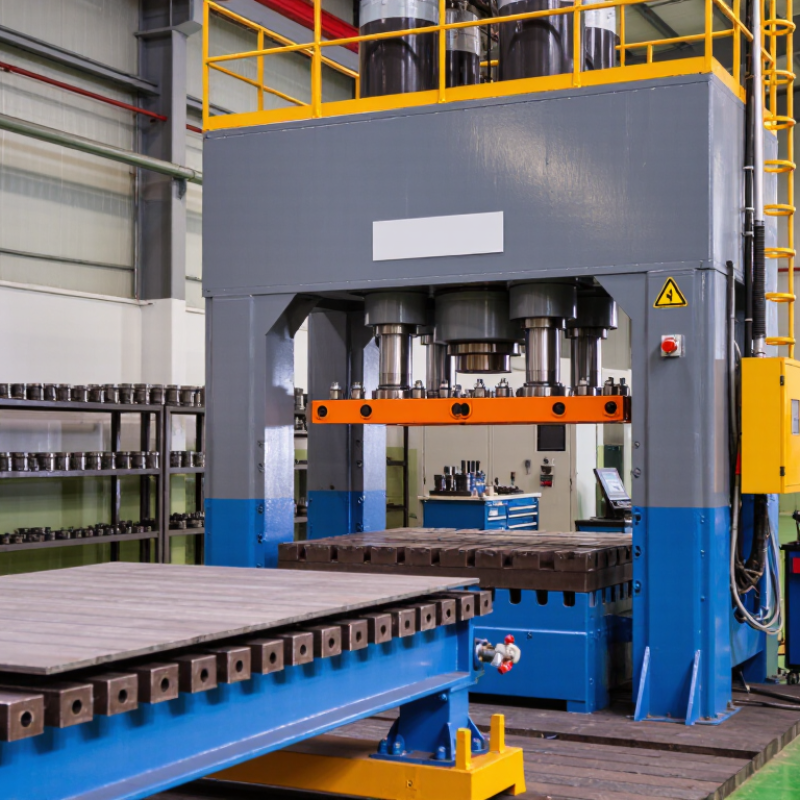
How to Choose a Frame Hydraulic Press in 2026?

What a Frame Hydraulic Press Is and How It Works

A frame hydraulic press turns fluid pressure into controlled linear force. An electric motor drives a pump, which sends oil through valves to a cylinder. Pressure acting on the piston moves the ram; the frame carries the reaction load. In simple terms, force equals pressure multiplied by piston area. The frame is not just a support. Its stiffness helps keep the ram and bed aligned under load, especially during off-center work.

The U.S. Department of Energy and Hydraulic Institute’s Improving Pumping System Performance sourcebook reports that pumping systems can account for 25–50% of energy use in some industrial facilities. That figure is not press-specific, but it makes pump sizing and idle operation worth checking. Choose a press by matching rated force, stroke, daylight, bed dimensions, and cycle speed to the actual part. A large tonnage rating alone proves little. A deep-drawn component may need a longer stroke and better alignment, while a small batch may not justify a fast, high-output machine. Check guarding, pressure controls, leakage access, and the operator’s view of the work area. Small details matter. A practical selection can still be imperfect: real materials vary, and estimates made before production may miss that variation.

How to Define Your Application and Required Press Capacity

How to Choose a Frame Hydraulic Press in 2026?

How to Define Your Application and Required Press Capacity

Start with the job, not the machine’s headline tonnage. Record the material grade, thickness, blank size, tooling layout, and operation: forming, straightening, or assembly. A 6 mm steel plate and a thin aluminum panel may need very different force and stroke profiles. Note the required daylight, bed area, approach speed, and daily cycle count too. Details matter.

Estimate force from the process, then verify it with tooling or material-test data. For a simple hydraulic calculation, force equals pressure multiplied by piston area: 25 MPa acting on 0.012 m² produces 300 kN, or about 30.6 metric tonnes. This is only an example, not a safe machine specification. World Steel Association reported 1,882.6 million tonnes of global crude steel production in 2024; that scale says little about your part’s forming force, which depends on grade, geometry, and process. A tonnage estimate can still be wrong if friction or uneven loading is ignored.

How to Compare Frame Types, Stroke, and Operating Speed

How to Choose a Frame Hydraulic Press in 2026?
How to Compare Frame Types, Stroke, and Operating Speed

Start with the frame that matches the workpiece and loading direction. An H-frame offers access from several sides and suits bulky jobs. A C-frame leaves one side open, making loading easier, but off-center force can increase frame deflection. Four-post designs guide the platen across a broad working area. Not just tonnage. Check the load’s position, too.

Stroke must clear the part, tooling, and loading path—not merely match the forming depth. Measure the part. Then compare daylight, shut height, and usable stroke against the tooling stack. For speed, separate approach, pressing, and return speeds. A fast approach does not guarantee a short production cycle. Ask for cycle times using your material and tooling, not an unloaded demonstration. Check the real cycle.

The U.S. Department of Energy’s 2006 report, Improving Pumping System Performance, estimates that pumping systems use nearly 20% of global electricity. That figure covers many industries, not hydraulic presses alone. Still, pump choice and idle behavior deserve attention alongside speed. I would treat catalogue cycle times cautiously; oil temperature, control settings, and tooling can change the result. Record several loaded cycles before deciding.

How to Choose a Frame Hydraulic Press in 2026? — How to Compare Frame Types, Stroke, and Operating Speed

Frame type Typical applications Work-area access Frame stiffness and alignment Indicative configurable stroke Typical speed considerations Best fit when...
C-frame (gap frame) Assembly, punching, straightening, small forming jobs, and work requiring frequent tool access. Open on three sides, providing convenient access for loading and unloading. Less resistant to off-center loading than a closed frame; excessive side loading can cause deflection and affect tool alignment. About 100–500 mm in many general-purpose configurations; actual stroke depends on press size and tooling. Commonly configured with approach speeds around 50–250 mm/s, pressing speeds around 5–25 mm/s, and return speeds around 60–250 mm/s. Easy access and a compact footprint matter more than maximum resistance to off-center loads.
H-frame (two-column) Die pressing, bending, straightening, assembly, and general-purpose production work. Usually open at the front and sides, with access depending on the bed and guarding arrangement. Two uprights support the work area; rigidity depends on column size, tie arrangement, platen design, and load positioning. About 150–600 mm in many configurable designs. Speed is selected for the process and hydraulic system. A rapid approach, slower working stroke, and powered return are common arrangements. You need a versatile press with a larger work area or more capacity than a typical compact gap-frame unit.
Four-column Compression molding, deep drawing, laminating, and applications with larger platens or distributed loads. Good access around the work area; columns may limit side access for oversized parts or fixtures. Four columns guide the moving platen and help maintain alignment; performance still depends on design, loading, and maintenance. About 100–500 mm in many standard configurations; longer strokes are available in purpose-designed machines. Approach and return can be relatively fast on suitable systems; working speed is usually reduced to control force and process conditions. Platen guidance, a broad working area, and repeatable alignment are priorities.
Straight-side (closed-frame) High-force forming, stamping, drawing, and production processes requiring a stiff structure. Typically provides access from the front; side access may be restricted by the frame and guarding. Closed sides generally provide strong resistance to frame spreading and are well suited to demanding, centered production loads. About 200–800 mm in many production configurations; stroke is highly application-specific. Speed depends on pump flow, cylinder area, controls, and the forming process. High approach speed may be paired with a slower pressing phase. High structural stiffness and production capability outweigh the need for open side access.

Selection note: Stroke and speed figures are indicative planning ranges, not standards or limits for a frame type. Hydraulic press specifications vary by tonnage, cylinder size, pump and control system, tooling, and safety requirements. Confirm the required daylight, shut height, stroke, working speed, return speed, duty cycle, and permissible off-center loading with the machine supplier before selection.

How to Assess Controls, Safety Features, and Maintenance Needs

When choosing a frame hydraulic press in 2026, inspect the controls at the machine, not just in a specification sheet. Can an operator see the work area clearly? Are emergency stops reachable, and do guards or interlocks prevent access during hazardous movement? Verify that the control system suits the press’s operating mode and risk assessment. A convenient button is not a safeguard by itself. Small details matter.

Safety data offers useful context, though it is not press-specific. The U.S. Bureau of Labor Statistics reported 738 fatal workplace injuries from contact with objects or equipment in 2022. Liberty Mutual’s 2024 Workplace Safety Index estimated that overexertion cost U.S. employers $12.8 billion in 2021. Ask suppliers for documented safeguarding details, inspection intervals, and operator training requirements. Then check whether routine service is practical: can technicians inspect hoses, fittings, oil levels, filters, and leak points without awkward access? A small leak can become a bigger problem. Keep maintenance records and follow the manufacturer’s service instructions. Some checks may feel repetitive; skipping them can make wear harder to spot. A checklist helps, but it cannot replace a careful look at the press and its actual work cycle.

How to Verify Supplier Quality, Installation, and Support

Choosing a frame hydraulic press in 2026 means checking more than rated tonnage. Ask suppliers for material specifications, weld inspection records, and a documented test under load. Compare the test conditions with your intended work; a no-load demonstration says little about repeatable force. Request references from facilities using similar tooling and duty cycles. Paperwork matters. Still, records deserve verification, not automatic trust.

Before purchase, confirm who prepares the foundation, connects utilities, levels the frame, and validates safety functions. Get installation responsibilities and acceptance criteria in writing, including pressure checks, guarding, and emergency-stop tests. Ask about operator training, maintenance intervals, spare-part lead times, and a named service contact. A clear response time is useful, but ask how it is measured and what happens if a technician is unavailable. Keep the commissioning report and baseline readings. Small omissions can become expensive later. A polished factory visit is not a substitute for checking the actual machine configuration; that detail is easy to overlook.

How to Choose a Frame Hydraulic Press in 2026

Verify supplier quality, installation readiness, and ongoing support using a balanced evaluation scorecard.

How to use this chart: These suggested weights are a buyer’s evaluation framework, not results from a market survey. Request evidence for each category, such as inspection records, commissioning plans, operator training, and documented service commitments.