How to Choose the Best Gas Filtration Device for You?
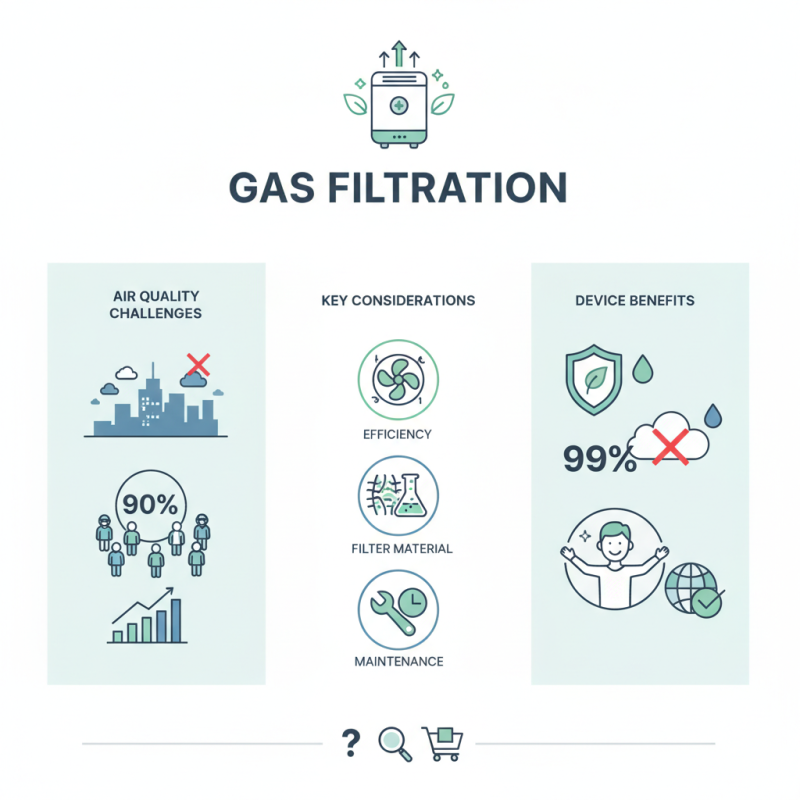
Choosing the best Gas filtration device is vital for ensuring air quality in various environments. Recent studies indicate that over 90% of urban areas experience air quality issues. This underscores the importance of effective gas filtration systems. A reliable gas filtration device can significantly reduce harmful pollutants, protecting both health and the environment.
In a market filled with options, making an informed choice is essential. Factors to consider include efficiency ratings, filter material, and maintenance requirements. According to the Environmental Protection Agency, high-quality devices can remove up to 99% of certain contaminants. However, not all devices meet this standard. Some may fall short, lacking necessary certifications.
Moreover, users often overlook the importance of regular filter replacement. A neglected filter can lead to diminished performance. This reality calls for careful consideration and research. By evaluating options based on performance data, users can better navigate the complexities of gas filtration. Ultimately, choosing the right device requires both knowledge and reflection on specific needs.
Understanding the Basics of Gas Filtration Devices
Gas filtration devices play a crucial role in air quality management. Understanding the basics can significantly enhance your decision-making process. These devices help remove harmful gases and impurities from the air. They can be essential in both industrial settings and personal spaces, such as homes.
The effectiveness of a gas filtration device heavily relies on its design and technology. Many devices utilize activated carbon or chemical absorbers to capture pollutants. However, the performance can vary greatly depending on specific applications. Regular maintenance is essential. Neglecting this can diminish their effectiveness. Users often overlook this aspect, leading to unsatisfactory results.
Choosing the right device is not always straightforward. Each situation is unique, and needs change. Conducting thorough research is vital. Assess the pollutant types, concentration levels, and required air flow rates. Misjudgments in this process can result in inadequate filtration. Attention to detail will ensure you select a reliable option, improving air quality effectively.
Identifying Your Specific Filtration Needs
When selecting a gas filtration device, understanding your specific filtration needs is crucial. The right choice significantly impacts air quality and safety. According to recent studies, poor air quality can lead to health risks, making effective filtration essential. Identify the pollutants prevalent in your environment. Common hazardous gases include volatile organic compounds (VOCs), particulates, and chemical vapors.
Consider the concentration levels of these pollutants. For example, VOC levels can vary greatly based on geographic location and industrial activity. Studies show that over 40% of indoor air can be more polluted than outdoor air, emphasizing the need for appropriate filtration. Devices equipped with activated carbon and HEPA filters can effectively reduce harmful substances. However, not all devices target the same contaminants.
Carefully assess your space. Larger areas may require multiple devices for adequate coverage. Analyze your specific circumstances. It might be challenging to find a perfect solution, and some devices may fall short in performance. Gather feedback from experts or detailed reviews. Trustworthy sources often reveal common pitfalls in popular filters, guiding you toward informed decisions. Balancing technical specifications with your unique needs can lead to more effective filtration outcomes.
How to Choose the Best Gas Filtration Device for You? - Identifying Your Specific Filtration Needs
| Filtration Type | Efficiency (%) | Application | Maintenance Frequency | Cost (USD) |
| Activated Carbon Filter | 85% | Odor Removal | Every 6 months | 50 |
| HEPA Filter | 99.97% | Dust & Allergens | Annually | 150 |
| Electrostatic Filter | 95% | General Air Filtration | Every 3 months | 70 |
| UV Light Filter | 90% | Microbial Control | Every 12 months | 200 |
| Ceramic Filter | 99% | Water Purification | Every 6 months | 80 |
Evaluating Different Types of Gas Filtration Technologies
When selecting a gas filtration device, understanding the various technologies available is crucial. Common types include activated carbon filters, which excel at removing odors and volatile organic compounds. These filters have a high surface area, capturing impurities efficiently. However, they may not filter out all gases, particularly certain toxic ones.
Another option is membrane filtration, which utilizes semi-permeable membranes to separate gases. This technology is reliable for specific applications, but it can be costly and requires careful maintenance. Users often report complexity in setup, which can deter their effectiveness if not done correctly.
Lastly, catalytic filtration encourages chemical reactions to neutralize harmful gases. While this method can be highly effective, it also requires careful consideration of the catalysts used. In practice, users might find it challenging to monitor the filter's performance over time. Each technology presents its pros and cons, making the decision somewhat daunting for consumers looking for reliable solutions.
Key Features to Consider When Choosing a Device
When selecting a gas filtration device, key features are crucial. You should prioritize airflow efficiency. A higher airflow rate means better filtration without compromising performance. Look for devices with adjustable airflow settings. This flexibility allows you to customize your experience based on your needs.
Another important aspect is the filter type. Various filters target different contaminants, such as particles and fumes. HEPA filters are great for small particles, while activated carbon filters excel at odor removal. Investigate the filter lifespan. Shorter lifespan filters may seem cheaper but could require frequent replacements, adding to long-term costs.
The build quality matters too. A sturdy design often correlates with durability. Lightweight materials may be more portable but can wear out quickly. Evaluate user reviews to gauge long-term reliability. Not every product lives up to its promises. Checking for independent testing can provide additional assurance of performance. Engaging with user communities online may yield insights you won't find in marketing material.
Comparing Top Brands and Models in the Market
When choosing a gas filtration device, understanding the brands and models available is crucial. Recent industry reports indicate that over 75% of consumers prioritize efficiency and effectiveness when making their decisions. It's important to compare filtration technologies. For instance, HEPA filters capture at least 99.97% of particles, making them a popular choice.
Additionally, user reviews can offer insights that statistics cannot. Many users highlight the importance of maintenance and ease of use. A model might feature an intuitive interface, but if filter replacement is complicated, it can lead to frustration. Reports show that poor maintenance can reduce a device's efficiency by up to 50%.
Another consideration is the noise level. Some models operate quietly, while others produce disruptive sounds. This becomes vital in residential settings, where peace is essential. Selecting a device requires balancing these factors, reflecting on personal needs and space. Overall, the best choice involves not just data, but also user experiences and practical implications.
