Why Choose a Gate Valve for Your Piping System?
In industrial piping systems, the choice of valves significantly impacts performance. Gate Valves are gaining popularity due to their ability to provide low resistance and complete flow. According to a recent report by Global Market Insights, the gate valve market is expected to exceed $4 billion by 2026. This reflects the increasing reliance on gate valves across various sectors.
Gate valves are particularly suited for on/off services. Their design allows for minimal pressure drop and is ideal for throttling applications. Industry data shows that the efficiency of gate valves contributes to reduced energy consumption by as much as 10%. This has prompted many companies to reconsider their valve choices for cost-effectiveness.
However, gate valves also come with challenges. They are less effective in regulating flow, which can be a limitation in certain situations. Some projects may suffer from improper valve selection, leading to future inefficiencies. Thus, it's essential to evaluate both the advantages and shortcomings of gate valves in the context of your specific piping needs.
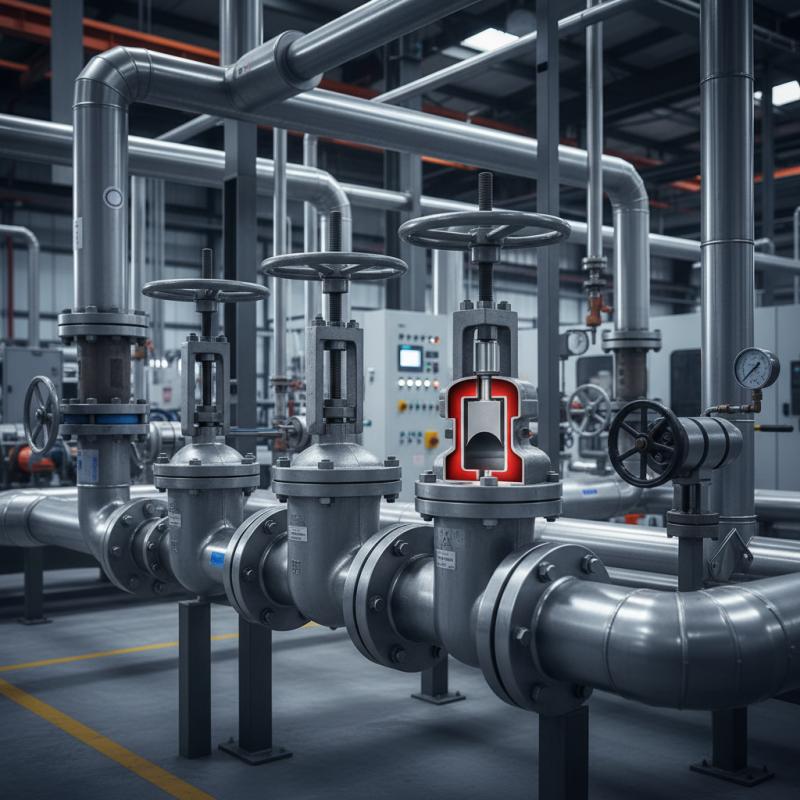
Understanding Gate Valves: Definition and Functionality
Gate valves are vital components in piping systems. They control the flow of fluids and gases. Their design features a flat or wedge-shaped disk. This disk moves up and down to either open or close the valve. When fully open, gate valves offer minimal resistance. This uniform flow makes them ideal for many applications.
Tips: Choose the right size. A valve too large or small can cause issues. Regular maintenance is essential. Inspect seals and corrosion levels regularly.
Gate valves work best in on/off applications. They should not be used for throttling. In situations where flow needs adjusting, other valve types may be more suitable. Consider the medium being handled. Some fluids may affect the valve material.
Tips: Always check compatibility. Using inappropriate materials can lead to failures. When you see leaks, act quickly. Timely intervention can prevent bigger problems.
Why Choose a Gate Valve for Your Piping System?
This chart illustrates the advantages of using gate valves in various applications, highlighting their benefits in flow efficiency, cost, and durability. The data emphasizes their effectiveness in industrial settings compared to other valve types.
Key Advantages of Using Gate Valves in Piping Systems
Gate valves are a popular choice in various piping systems due to their unique advantages. One major benefit is their ability to provide a straight-line flow passage. This design minimizes pressure loss and allows for efficient fluid transport. When fully opened, gate valves can deliver significant flow rates, making them ideal for applications that require high throughput.
Another key advantage is their simplicity in operation. Gate valves can be easily opened or closed with a quarter turn. This makes controlling the flow straightforward, even in complex systems. Additionally, the durable design helps prevent leaks. However, they are not suitable for modulating flow. If constant adjustments are needed, other valve types might be a better option.
Maintenance can also be an area for reflection. Gate valves require regular checks to ensure seals are intact. If neglected, they may lead to operational issues. It's essential to consider this when integrating them into your system. Over time, the efficiency may decline if not properly maintained. Proper care is vital for ensuring long-lasting performance in your piping system.
Why Choose a Gate Valve for Your Piping System? - Key Advantages of Using Gate Valves in Piping Systems
| Advantage | Description | Suitable Applications |
| Minimal Pressure Drop | Gate valves provide a straight flow path, minimizing resistance and pressure drop. | High-capacity pipelines, water supply systems. |
| Full Flow Area | Gate valves offer a full aperture, allowing maximum flow of fluids. | Oil and gas transportation, wastewater management. |
| Durability | Constructed from robust materials, gate valves are resistant to wear and tear. | Industrial applications, demanding environments. |
| Secure Sealing | Gate valves provide a tight seal with minimal leakage when closed. | Liquids and gases that require a leak-proof system. |
| Low Maintenance | Gate valves require less frequent maintenance compared to other valve types. | Long-term projects, infrastructures with limited access. |
Applications of Gate Valves in Various Industries
Gate valves are commonly used in various industries due to their design and functionality. In the water and wastewater sector, they help control flow effectively. Their ability to create a tight seal makes them perfect for preventing leaks. This is crucial when dealing with drinking water. However, sometimes they may not provide precise flow control.
In the oil and gas industry, gate valves play a critical role. They can be found in pipelines, refineries, and storage facilities. The robust construction allows them to handle high pressures and temperatures. Yet, they require regular maintenance to ensure optimal performance. Neglect can lead to significant issues, such as corrosion or malfunction.
Additionally, gate valves are essential in the chemical manufacturing sector. They ensure safety and reliability when handling various fluids. However, the risk of wear and tear exists, especially with aggressive chemicals. Operators must regularly inspect and replace old valves. This helps prevent downtime and safeguards processes.
Comparing Gate Valves to Other Valve Types
When considering valves for a piping system, gate valves stand out for specific applications. They allow for full flow with minimal pressure drop. Unlike ball or globe valves, they are designed to be either fully open or fully closed. This design minimizes turbulence in the system. Gate valves excel in high-temperature and high-pressure environments. They are not ideal for throttling or regulating flow.
Tips: Always assess the pressure and temperature demands of your system. Gate valves are great for on/off service but may not perform well in all scenarios.
In contrast to globe valves, which offer better flow regulation, gate valves are less suitable for applications requiring frequent adjustments. Their simple mechanism aids in maintenance. However, operators need to remember: these valves can be slow to open and close. This can lead to delays.
Tips: Regular inspections can help identify wear and tear. Ensure the valve is fully operational before critical use.
When comparing to ball valves, gate valves have a slower response time. Ball valves provide rapid shut-off, which can be crucial in emergencies. However, gate valves can handle larger volumes effectively. Consider your needs carefully.
Maintenance and Best Practices for Gate Valve Usage
Maintaining a gate valve is crucial for optimal performance in your piping system. Regular inspections can prevent leaks and failures. Look for signs of corrosion or wear. It's wise to operate the valve periodically. This action ensures that it opens and closes smoothly. A stuck valve can lead to larger issues down the road.
When using gate valves, follow best practices. Always ensure the valve is fully opened or closed. Partial openings may damage the valve over time. Check seals and packing for wear. Replacing these components can extend the valve's lifespan.
Keep a maintenance log to track repairs and replacements. This may sound tedious but can save time and money.
Be mindful of the environment in which the valve operates. Changes in temperature and pressure can affect its performance. Sometimes, valves may not perform well due to unexpected factors. Regular maintenance and a keen eye for detail can help you avoid these pitfalls. It's essential to stay informed about proper operation and maintenance techniques.
