Automated Valves are often judged by what happens when the process is under pressure: a sensor detects a change, a controller sends a signal, and an actuator moves the valve. In a Chinese factory, that sequence may regulate water, steam, chemicals, or compressed air. A catalog can show materials, pressure ratings, and connection sizes, but it cannot prove how a valve performs in your specific system. Small details matter.
“Science is about knowing; engineering is about doing,” wrote engineer and author Henry Petroski. His observation offers a useful lens for comparing manufacturers: specifications matter, but so do testing, integration, and support after installation. This guide to the Top 10 Automated Valve Manufacturers in China considers product range, documented technical capabilities, quality practices, customization, and service. These factors can help buyers build a shortlist, not replace independent checks. Ask for relevant certificates, test records, and clear details about actuator compatibility and control protocols.
No ranking fits every project. A food-processing line and a high-temperature power system do not ask the same questions. Claims can also look stronger on paper than they prove in operation; that deserves scrutiny. Verify details directly with each supplier, and compare evidence against your operating conditions. The right choice depends on the application, not just a prominent name.
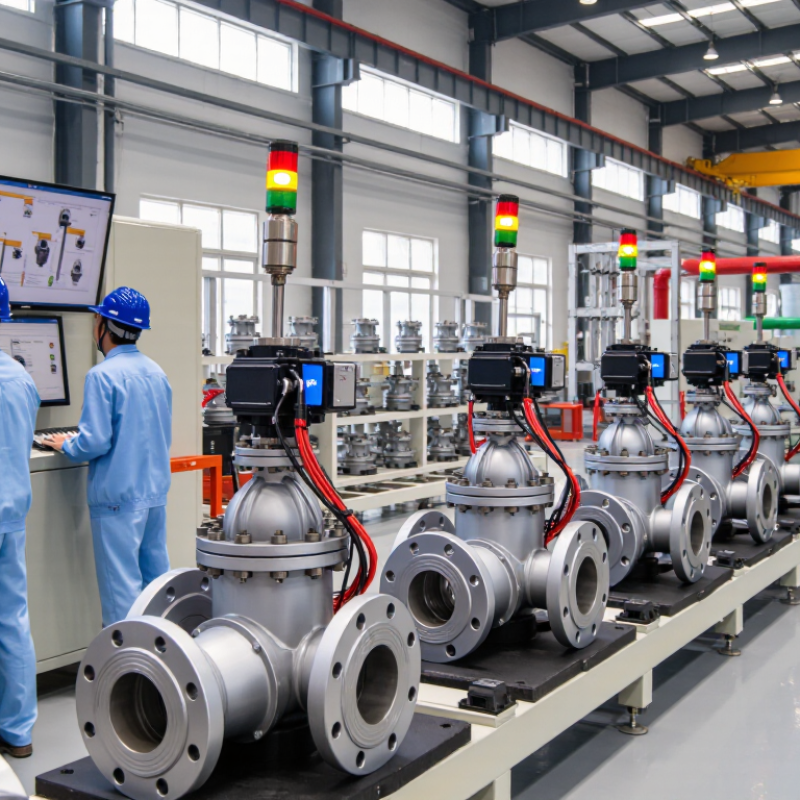
An automated valve combines a valve body with an actuator and a control signal. The body opens, closes, or restricts flow; the actuator supplies the movement. Electric actuators use motors, while pneumatic models use compressed air. Hydraulic versions use pressurized fluid. Simple on-off valves isolate a line. Modulating valves adjust flow more gradually, like a tap responding to changing demand. Small, visible movements matter.
A controller may send a setpoint, and a positioner helps the valve reach it. Feedback can report the valve’s position, while sensors measure pressure, temperature, or flow nearby. In a water-treatment line, for example, a control system can adjust a valve as measured flow changes. The International Energy Agency’s Energy Efficiency 2023 report estimates that industry accounts for about 37% of global energy use. Efficient process control matters, but a valve alone cannot guarantee savings. Incorrect sizing or poor maintenance can still cause unstable flow and wear.
Tips: Check fluid, pressure, temperature, and required response time before selecting an actuator. Consider what happens during power or air loss. Sizing is often underestimated.
Choosing among China’s automated valve manufacturers requires more than comparing prices and product photos. Start with the intended duty: fluid type, operating pressure, temperature range, valve size, and required cycling frequency. Ask for material specifications and traceability records, then check whether the proposed body, seals, and trim suit those conditions. Details matter.
Review testing evidence, not just brochures. Useful records may include pressure-test results, leakage checks, actuator cycle data, and inspection procedures tied to the actual valve model. Confirm which standards and certificates apply to the product and production site; a certificate alone does not prove performance in your process. Request sample documents and clarify acceptance criteria before ordering. A small discrepancy in actuator voltage or control signal can cause costly commissioning delays.
Assess manufacturing consistency through a factory visit or a qualified third-party audit, where practical. Look at machining, assembly cleanliness, calibration equipment, and how nonconforming parts are handled. Ask about spare parts, technical response times, and warranty limits in writing. Then compare like-for-like quotations, including testing, packaging, and delivery terms. No checklist is perfect. A polished audit may miss a weak point, while a smaller supplier may offer strong engineering support. Treat claims as questions to verify, and record what remains uncertain before making a decision.
Leading automated valve manufacturers in China compete on more than price. Strong suppliers match valve bodies, actuators, and control signals to the process. Ask for pressure-test records, material traceability, and cycle-test results. These documents reveal more than a polished catalogue. A factory visit helps, but it cannot replace a witnessed test.
MarketsandMarkets’ 2023 industrial valves market report estimated global sales at USD 66.1 billion in 2023, with growth projected to USD 78.5 billion by 2028. The figures cover industrial valves broadly, not automated units alone. Still, they reflect steady demand across process industries. For buyers, practical checks matter: actuator sizing, fail-safe position, enclosure protection, and response time under load. One weak point is often overlooked: control integration. A reliable valve can still perform poorly when its signal range or wiring differs from the plant’s system.
Tips: Request a sample test report before ordering. Confirm the test medium, pressure, and acceptance criteria. Small details count. Compare spare-part availability and service response times, too. A low quote may hide delays; ask for realistic lead times in writing.
Across China’s automated-valve sector, manufacturers commonly supply ball, butterfly, gate, globe, and control valves. Product lines may include electric or pneumatic actuators, positioners, and control accessories. Options vary by size, pressure rating, body material, and connection type. This range supports both straightforward shutoff duties and more precise flow regulation. Fit matters.
Water and wastewater plants use automated valves to manage filtration, chemical dosing, and pump isolation. In power facilities, control valves regulate steam or cooling-water flow, while shutoff valves help isolate equipment during maintenance. Chemical processors often need compatible materials and seals to handle specific fluids and temperatures. Heating and cooling systems rely on compact actuated valves to balance flow across buildings. The same valve design may not suit every service.
For buyers comparing leading suppliers, application details matter more than a broad catalogue. Check the required flow rate, pressure, temperature, cycle frequency, and actuator power before selecting a model. Ask how the supplier verifies leakage performance and tests the actuator-valve assembly. A digital positioner can improve monitoring, but it also adds setup and maintenance needs. Specs can look reassuring on paper. Site conditions may still expose a mismatch, especially when fluid quality or operating cycles were estimated rather than measured.
When comparing automated valve manufacturers in China, start with the duty point, not the catalogue. Record the medium, pressure, temperature, cycle frequency, and required fail position. MarketsandMarkets’ Industrial Valves Market report estimates a $78.2 billion global market in 2023, rising to $94.4 billion by 2028. Grand View Research estimates the 2023 market at $79.5 billion, with 4.3% annual growth through 2030. These reports use different market scopes, but both describe a crowded, expanding supply base. A large market is not proof of reliable execution.
Ask suppliers for actuator torque calculations, pressure-test records, material certificates, and traceability for key components. Check whether the proposed actuator has adequate torque margin under your actual operating conditions. Confirm mounting compatibility, ingress protection, manual override, and the specified fail-safe action. Small details matter. Request sample inspection records and a factory acceptance test plan; compare delivery commitments and local service response in writing. A polished sample can still hide a weak production process, an easy mistake to make. I would also ask how nonconforming parts are handled, not just how quickly orders ship. Cite the exact test standard and acceptance limits in the purchase specification, so competing quotations can be compared on the same basis.
| Profile | Typical Product Strength | Common Material Options | Standards to Check | Typical Application Fit | Supplier Comparison Checks |
|---|---|---|---|---|---|
| Profile 01 Pipeline valve specialist |
Trunnion- or floating-ball valves, pipeline gate valves, and check valves; manual or actuator-ready configurations. | Carbon steel, stainless steel, and alloy steel bodies; seat and trim materials should be specified for the service. | API 6D for pipeline valves; API 598 for inspection and testing; API 607 or ISO 10497 when fire testing is specified. | Oil and gas transmission, terminals, and process pipelines. | Check pressure class, bore, end connections, emissions requirements, fire-test scope, and traceability of pressure-retaining materials. |
| Profile 02 Industrial ball valve specialist |
Floating-ball and trunnion-ball designs, including soft-seated and metal-seated options. | Carbon steel, stainless steel, duplex stainless steel, and selected alloys; seating materials depend on temperature and media. | API 608 for metal ball valves; API 598 for inspection and testing; ISO 5211 for actuator-mounting interfaces where applicable. | General process plants, chemical services, and utility isolation. | Compare seat leakage criteria, cavity relief design, operating torque data, cycle testing, and actuator sizing documentation. |
| Profile 03 Gate, globe, and check valve specialist |
Bolted-bonnet and pressure-seal designs, plus compact forged-steel valves in applicable sizes and pressure ratings. | Carbon steel, stainless steel, and alloy steel; trim and hard-facing options are service-dependent. | API 600 for steel gate valves; API 602 for compact steel valves; API 594 for check valves; API 598 for inspection and testing. | Refineries, chemical plants, and high-temperature process lines. | Verify design standard and edition, pressure-temperature ratings, trim details, end-to-end dimensions, and required inspection records. |
| Profile 04 Butterfly valve specialist |
Concentric, double-offset, and triple-offset butterfly valves; wafer, lug, and flanged body styles. | Ductile iron, carbon steel, and stainless steel bodies; elastomer, polymer, or metal seats according to duty. | API 609 for butterfly valves; ISO 5211 for actuator-mounting interfaces where applicable; project-specific pressure and test standards. | Water treatment, HVAC, utilities, and process isolation or control. | Compare pressure rating, face-to-face dimensions, disc and seat materials, shutoff class, and actuator torque calculations. |
| Profile 05 Control valve specialist |
Globe-style and rotary control valves, with pneumatic or electric actuation and positioner options. | Carbon steel, stainless steel, and alloy steel bodies; trim material selected for erosion, corrosion, and cavitation conditions. | IEC 60534 series for industrial-process control valves; confirm the applicable parts for sizing, testing, and dimensions. | Flow, pressure, and temperature regulation in process plants and utilities. | Request sizing calculations, flow coefficients, rangeability, fail action, noise or cavitation assessment, and complete actuator data. |
| Profile 06 Cryogenic valve specialist |
Extended-bonnet ball, globe, gate, and check valves designed for low-temperature service. | Low-temperature carbon steel, austenitic stainless steel, and other qualified alloys; materials must match the minimum design temperature. | BS 6364 or ISO 28921-1 where specified for cryogenic service; also verify the applicable product and pressure-test standards. | LNG, industrial gases, and other low-temperature fluid systems. | Check minimum design temperature, bonnet extension, low-temperature impact-test evidence, seat leakage results, and cryogenic test procedure. |
| Profile 07 Forged high-pressure valve specialist |
Small-bore forged gate, globe, and check valves, including socket-weld, threaded, and flanged ends. | Forged carbon steel, stainless steel, and alloy steel; material grade and heat treatment should be documented. | API 602 for compact steel valves; ASME B16.34 for applicable valve pressure-temperature ratings and construction requirements. | High-pressure steam, utility piping, and compact process connections. | Verify forging material certificates, heat-treatment records, pressure class, connection dimensions, and production test reports. |
| Profile 08 Power-generation valve specialist |
Gate, globe, check, and control valves configured for steam and high-temperature water duties. | Carbon steel and alloy steel grades selected for pressure, temperature, and service conditions. | ASME B16.34 and the specified product standards; confirm applicable piping code and project requirements. | Power stations, boiler systems, and steam distribution networks. | Compare pressure-temperature capability, thermal-cycle suitability, material traceability, inspection scope, and documented operating limits. |
| Profile 09 Waterworks valve specialist |
Resilient-seated gate valves, butterfly valves, and related water-service designs. | Ductile iron or cast iron bodies with service-appropriate coatings and elastomer seats; confirm potable-water approvals when required. | AWWA C509 or C515 for resilient-seated gate valves and AWWA C504 for butterfly valves when those specifications are required by the project. | Municipal water supply, water treatment, and distribution networks. | Check working pressure, coating system, potable-water compliance, operating nut or actuator interface, and service-life test evidence. |
| Profile 10 Corrosion-resistant and lined valve specialist |
Diaphragm, ball, butterfly, or plug valves with corrosion-resistant alloys, non-metallic wetted parts, or internal lining. | Stainless steel, duplex alloys, nickel alloys, and PTFE- or PFA-lined configurations, subject to media compatibility. | Confirm the applicable valve design and pressure standard; specify lining material, thickness, and inspection method in the purchase documents. | Chemical processing, corrosive fluids, and services where material compatibility is critical. | Request a media-compatibility review, temperature and pressure limits, lining inspection records, permeation considerations, and spare-parts details. |

Comparison note: The profiles above are anonymized capability categories, not a verified ranking or a directory of specific companies. Standards and materials are examples to check against the project specification; actual availability, certification, and performance must be confirmed with each supplier for the exact valve model and service conditions.