2026 Top Hydraulic Proportional Valve Trends and Insights?
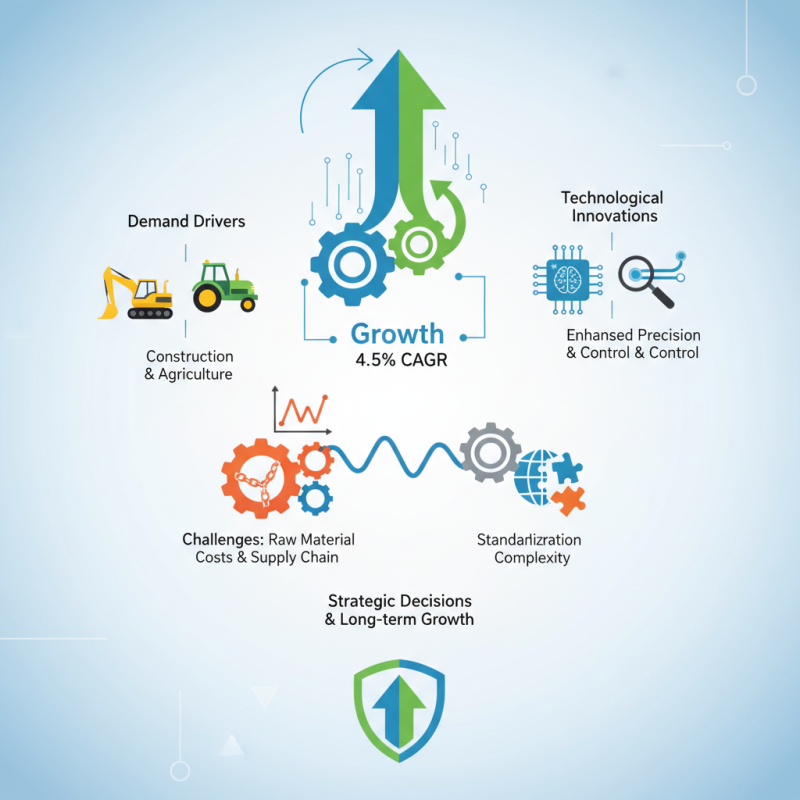
The Hydraulic Proportional Valve industry is undergoing significant transformations as we approach 2026. According to recent market analyses, the global hydraulic proportional valve market is projected to experience a compound annual growth rate (CAGR) of over 4.5% from 2021 to 2026. This growth is driven by rising demands in various sectors, including construction and agriculture.
Innovations in hydraulic technology are shaping how these valves function. Enhanced precision and control capabilities are becoming fundamental. Manufacturers are focusing on integrating smarter electronics within hydraulic systems. Such advancements can improve system efficiency while reducing energy consumption. However, there is a need to address quality assurance and reliability in these new developments.
Despite these advancements, challenges remain. The market faces issues related to fluctuating raw material costs and supply chain disruptions. Additionally, achieving uniform standards across different regions is complex. As we navigate through 2026, awareness of these factors will be essential for companies investing in hydraulic proportional valves. Understanding market dynamics allows for better strategic decisions, ensuring long-term growth in this critical industry.
Emerging Technologies in Hydraulic Proportional Valves for 2026
Hydraulic proportional valves are essential in controlling fluid flow. As we approach 2026, several emerging technologies are shaping their development. These innovations focus on efficiency and precision. Manufacturers are increasingly incorporating IoT technology. This integration allows for remote monitoring and control. Operators can adjust settings in real time, enhancing responsiveness and productivity.
One notable trend is the use of advanced materials. Lightweight composites reduce valve weight, improving performance. Pressure and temperature resistances of these materials are also significant. Though promising, these new materials raise concerns about durability. Testing protocols must adapt to these changes. Ensuring reliability in various environments is crucial.
Another emerging technology is predictive maintenance. By leveraging data analytics, users can anticipate failures before they happen. However, this methodology is not without challenges. Data privacy and security issues must be addressed. As more devices connect, the potential for breaches increases. It’s vital for developers to prioritize user data protection while enhancing overall valve performance.
2026 Top Hydraulic Proportional Valve Trends and Insights
This chart illustrates the top trends in hydraulic proportional valves for 2026, highlighting the key market shifts towards smart control systems, energy efficiency, IoT integration, miniaturization, and cost reduction.
Key Market Players and Their Innovations in Hydraulic Proportional Valves
The hydraulic proportional valve market is evolving rapidly. Key players are driving innovations to enhance efficiency and performance. Many companies are focusing on improving fluid control precision. This leads to better system responsiveness. However, challenges persist in keeping up with technology's pace. Not every innovation meets the intended demands.
One notable trend is the integration of digital technology. This allows for real-time data tracking and analysis. Such advancements can lead to increased productivity. Yet, implementation can be costly and complicated. Not all manufacturers are ready for this transition. The need for skilled personnel remains a concern.
Additionally, sustainability is becoming a focal point. Many companies are exploring eco-friendly materials and processes. This is crucial as regulations tighten. Some innovations promise reduced energy consumption. However, balancing cost with sustainability remains a struggle for many. Innovations should not compromise performance or reliability.
Consumer Demand Trends Influencing Hydraulic Proportional Valve Design
The design of hydraulic proportional valves is increasingly influenced by consumer demand. As industries move towards automation, the need for precision control rises. Reports indicate that the global hydraulic valve market will reach $28 billion by 2026. This shift underscores the necessity for innovative designs that enhance efficiency and performance.
Modern consumers prioritize eco-friendliness and energy efficiency. Hydraulic proportional valves need to integrate smarter controls. These controls allow for better responsiveness and reduced energy consumption. The trend reflects a broader move towards sustainability in industrial applications. Engineers must consider these preferences when designing new products.
**Tip**: Focus on user experience in design. A valve that offers seamless integration will attract more buyers.
Another emerging trend is the demand for compact designs. Space constraints in machinery are becoming more common. Market studies reveal that smaller valves can enhance overall equipment design. However, scaling down components can lead to challenges in maintaining performance.
**Tip**: Aim for balance between size and functionality. Enhancing one aspect may compromise another.
Staying flexible in design approach is essential. Be prepared to adapt to evolving consumer needs. Understanding what drives demand today can shape the products of tomorrow.
2026 Top Hydraulic Proportional Valve Trends and Insights
| Trend | Impact on Design | Consumer Demand | Market Growth (%) |
| Increased Automation | Higher accuracy and responsiveness | Demand for smart hydraulic systems | 15% |
| Sustainability Focus | Use of eco-friendly materials | Growing importance of green products | 12% |
| Customization Options | Modular design for various applications | Increased demand for tailored solutions | 18% |
| Digital Integration | IoT-enabled systems for data analysis | Interest in connectivity and monitoring | 20% |
| Compact Designs | Small footprint without sacrificing performance | Preference for space-saving equipment | 10% |
Sustainability and Environmental Impact of Hydraulic Proportional Valves
The sustainability of hydraulic proportional valves is more relevant than ever. As industries focus on eco-friendly solutions, the impact of these valves cannot be ignored. Recent reports indicate that about 30% of industrial energy consumption comes from hydraulic systems. Optimizing these systems with proportional valves can reduce waste significantly.
In terms of environmental impact, hydraulic fluids can pose risks. Studies show that improper disposal of hydraulic fluids contaminates soil and water sources. The transition to biodegradable fluids is slowly gaining traction, yet only about 15% of operators have made the switch. This shift could mitigate harmful leakages and promote healthier ecosystems.
Moreover, the manufacturing of hydraulic valves must also be examined. Traditional materials often lack sustainability. In fact, 40% of valve manufacturers are exploring recycled materials for production. This approach not only conserves resources but also addresses growing environmental concerns. Companies face challenges in balancing performance with eco-friendliness. They must reflect on their processes to enhance sustainability while maintaining efficiency.
Future Applications and Industries for Hydraulic Proportional Valve Technologies
Hydraulic proportional valve technologies are showing promising applications across various industries. These valves are essential for precise control in machinery. They adjust fluid flow dynamically, which enhances efficiency and performance. Industries such as construction, agriculture, and robotics rely heavily on these technologies. For example, in construction, they allow for smoother operation of earthmoving equipment.
Additionally, the automotive sector is exploring these valves for better fuel efficiency. As electric vehicles gain traction, proportional valves play a role in optimizing hydraulic systems. Their integration can improve responsiveness in steering and braking systems. However, challenges remain. Many companies struggle with the complexity of integration. There are also concerns about cost versus performance.
Looking ahead, the potential of these technologies is vast. Continued research is vital to address limitations. The goal is to make hydraulic systems more adaptable and sustainable. New materials and design approaches could lead to significant advancements. Emphasizing innovation will be crucial for industries to fully realize benefits.
